
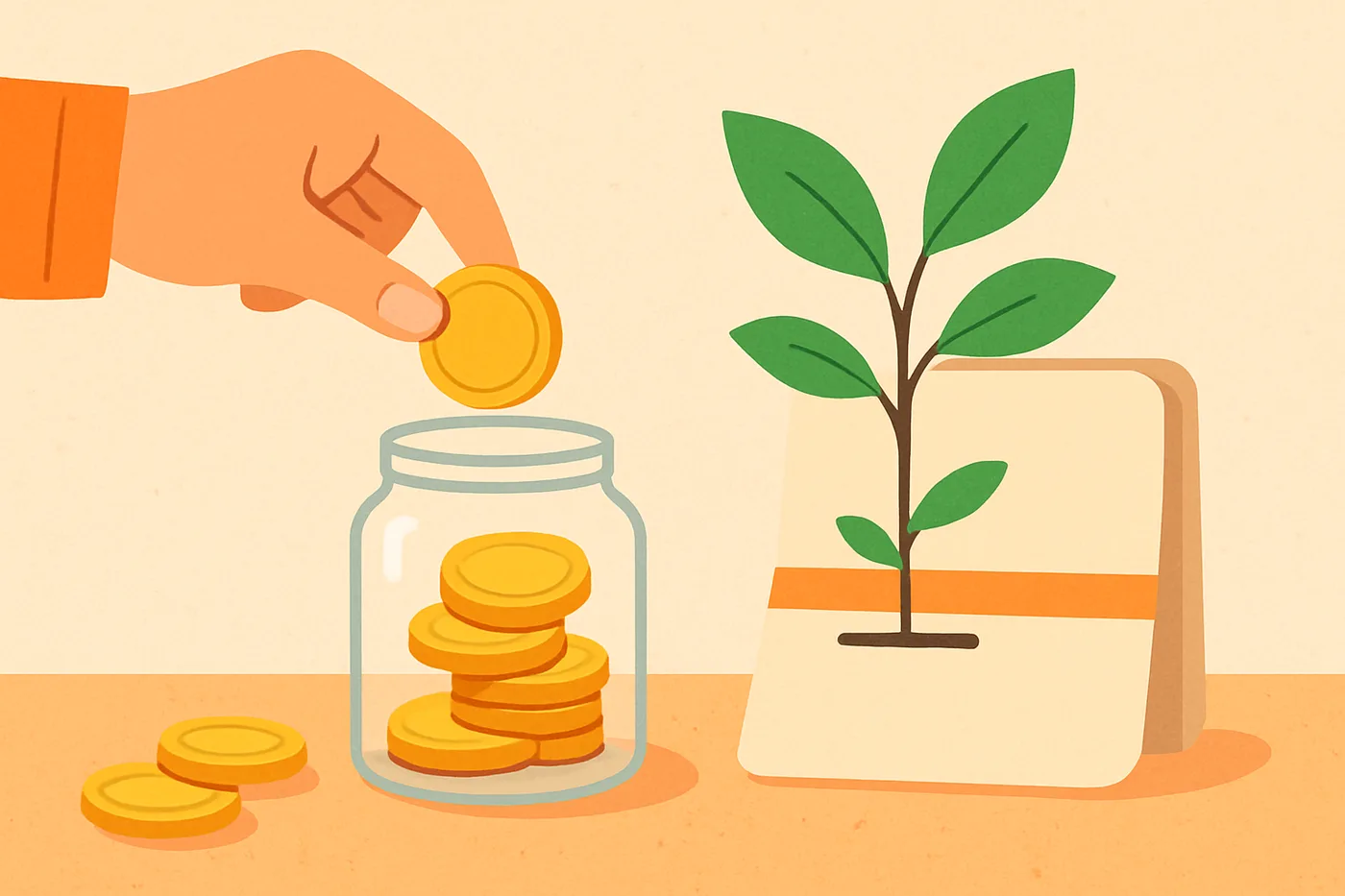
How to build a starter emergency fund
Start small — even a few hundred dollars — as a line item in savings before bigger goals.
The moment
On a Wednesday morning, Lin's car wouldn't start. The shop quoted $480 for a new battery and alternator check. She had $60 in checking and no savings. The repair went on a credit card — and the interest started the same day.
A starter emergency fund wouldn't have made her rich. It would have kept one bad morning from becoming a debt spiral that lasted six months.
63%
Adults who would cover a $400 emergency with cash or equivalent (2024)
Source: Board of Governors of the Federal Reserve System
55%
Adults with 3+ months emergency savings (2024)
Source: Board of Governors of the Federal Reserve System
Small buffers prevent debt spirals
The CFPB defines an emergency fund as cash set aside for unplanned expenses like car repairs, medical bills, or income loss. You do not need thousands on day one — a starter fund keeps one surprise from becoming a crisis.
Federal Reserve SHED data show many households still struggle with unexpected costs; building savings gradually is a widely recommended response.
Emergency fund vs. sinking fund: an emergency fund covers surprises you cannot schedule — job loss, ER visit, broken appliance. A sinking fund covers expenses you know are coming (insurance renewals, holidays, school fees) but not every month. You need both, for different reasons.
Start with a reachable starter goal
The CFPB suggests making saving automatic through recurring transfers, which removes the decision every payday.
- Pick a starter target you can hit in 3–6 months (many families start around $500–$1,000).
- Automate a small transfer each payday — even $25 per check adds up.
- Keep the money in a separate savings account so it is not spent casually.
- Longer term, work toward three months of essential expenses as income stabilizes.
Example: $50 per paycheck
Lin saves $50 per paycheck — $25 per check if she's paid biweekly. In 10 pay periods she hits $500. That's one car repair without a credit card.
Once she hits the target, she keeps the habit and raises the goal rather than redirecting the money to lifestyle inflation. Next milestone: $1,000, then one month of essential bills.
Ready to try it with your numbers?
Set up goals in Budgetmend
Create a free account to apply what you just read — assign your next paycheck, track safe-to-spend, and keep going.
Create free accountCommon mistakes
- Waiting until you can save 'the right amount' — $25 per paycheck beats $0 forever.
- Keeping emergency savings in checking where it's too easy to spend.
- Using the emergency fund for predictable annual bills — that's what sinking funds are for.
Your action step
Create an Emergency fund goal and assign a monthly amount in your Savings budget group. Set an automatic transfer if your bank supports it — even $25 per paycheck is a real start.
Up next
How to use sinking funds
Divide annual costs by 12 and save monthly so renewals and repairs don't wreck your month.
Read next lessonKeep learning
Sources & further reading
These lessons cite official U.S. government and federal research sources. Always verify current guidance on the publisher's site.
Put this lesson into practice
Create a free Budgetmend account to assign dollars paycheck by paycheck, track safe-to-spend, and open Goals with your real numbers.