
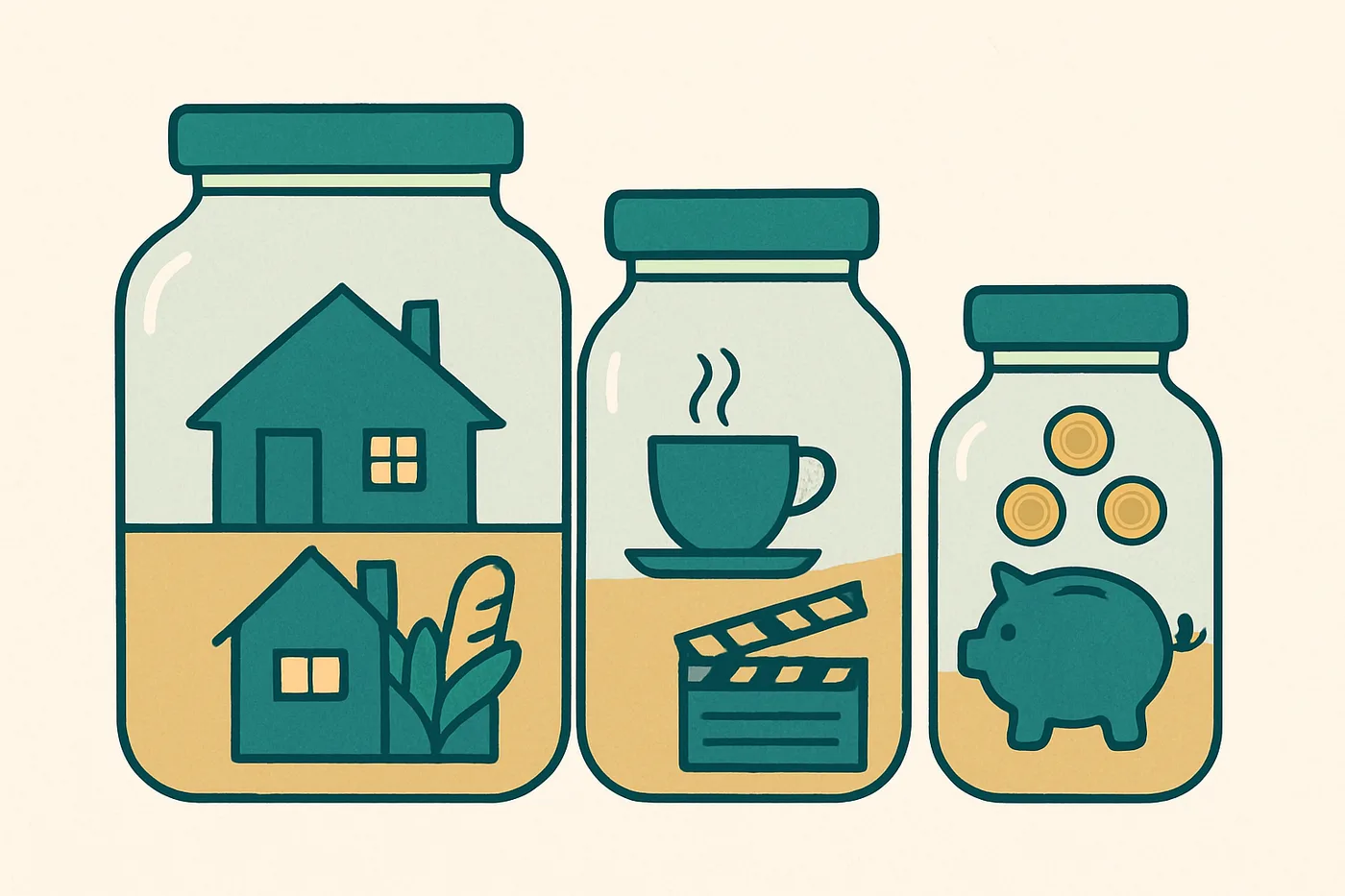
The 50/30/20 budgeting rule
A simple way to split take-home pay: 50% needs, 30% wants, 20% savings — and how Budgetmend adapts when life costs more.
The moment
Jamie earns $3,200 take-home per month and finally sat down to see where it all goes. Rent and utilities alone are $1,650. Groceries, gas, and insurance push needs to about $1,980 — that's 62% of income before a single restaurant meal or streaming subscription.
The 50/30/20 rule says needs should be around half. Jamie didn't fail — the rule just showed the gap. Now there's a real conversation: what can move, what can't, and what does a realistic split look like in this city?
50%
Needs (essentials)
Source: Consumer Financial Protection Bureau
30%
Wants (flexible lifestyle)
Source: Consumer Financial Protection Bureau
20%
Savings & extra debt payoff
Source: Consumer Financial Protection Bureau
A starting framework, not a strict law
The 50/30/20 rule divides after-tax income: about 50% for needs, 30% for wants, and 20% for savings and debt payoff beyond minimums. It was popularized by Elizabeth Warren and Amelia Warren Tyagi in All Your Worth as a way to balance today's bills with tomorrow's security.
The rule is a benchmark — not a pass/fail test. High-rent cities, medical costs, or debt recovery can push needs above 50%. The point is to see where your money goes and adjust intentionally instead of guessing.
What goes in each bucket
Use your take-home pay — what actually lands in checking after taxes and payroll deductions — not your gross salary. If you are paid every two weeks, Budgetmend converts paycheck amounts to a monthly view for this comparison.
- Needs (~50%): housing, utilities, groceries, transportation, insurance, minimum debt payments, and other must-pay essentials.
- Wants (~30%): dining out, entertainment, hobbies, subscriptions you could pause, gifts, and other flexible lifestyle spending.
- Savings (~20%): emergency fund, retirement, goals, and extra payments toward debt after minimums are covered.
Example: $3,000 take-home per month
On $3,000 after tax, 50/30/20 targets roughly $1,500 for needs, $900 for wants, and $600 for savings. If rent and utilities already use $1,400, you're close on needs — but you might only have $100 left in that bucket for groceries and gas unless income rises or housing costs fall.
A realistic plan might temporarily be 47/23/30 or an area-adjusted split until you can move, add income, or pay off a bill. The rule shows the gap; your budget shows the tradeoffs.
Paid biweekly? That's about $692 per paycheck for needs, $415 for wants, and $277 for savings at the classic split — useful when you're assigning dollars paycheck by paycheck.
Ready to try it with your numbers?
Set up local insights in Budgetmend
Create a free account to apply what you just read — assign your next paycheck, track safe-to-spend, and keep going.
Create free accountCommon mistakes
- Using gross salary instead of take-home pay — the rule only works on what actually hits your account.
- Treating the split as fixed forever instead of a snapshot you revisit when rent, debt, or income changes.
- Cutting groceries or minimum payments to force 50/30/20 — needs are needs; trim wants and protect essentials first.
Your action step
Open your Budget page and confirm each group is tagged Needs, Wants, or Savings. Then visit Local Insights or My Paycheck to see how your planned amounts compare to 50/30/20 and pick one category to adjust this month.
Up next
How to make your first budget
Start with your next paycheck, list bills due before it, then assign what's left to spending categories.
Read next lessonKeep learning
Sources & further reading
These lessons cite official U.S. government and federal research sources. Always verify current guidance on the publisher's site.
Put this lesson into practice
Create a free Budgetmend account to assign dollars paycheck by paycheck, track safe-to-spend, and open Local Insights with your real numbers.