Savings
Building an Emergency Fund on an Irregular Paycheck
Struggling to save with an irregular paycheck? Discover practical strategies to build your emergency fund with realistic starter amounts and automation.

In today's ever-changing economy, establishing an emergency fund is more crucial than ever, especially for those with irregular income streams. Whether you're a freelancer, gig worker, or self-employed, the unpredictability of your paycheck can make saving seem daunting. However, starting with realistic amounts and leveraging automation can simplify the process. According to a 2023 study by the Federal Reserve, nearly 40% of Americans would struggle to cover an unexpected $400 expense. This highlights the importance of having a financial cushion. By setting aside even small amounts consistently, you can build an emergency fund that provides peace of mind and financial security.
- Calculate your average monthly income to determine a realistic savings target.
- Set up an automatic transfer to your savings account each time you receive a paycheck.
- Start with a small, manageable amount, such as 5% of each paycheck, and adjust as your income grows.
- Use budgeting apps to track your income and expenses, ensuring you stay on target.
- Consider opening a separate high-yield savings account specifically for your emergency fund.
Key Takeaways
Building an emergency fund on an irregular paycheck requires strategic planning and discipline. By setting realistic starter amounts and utilizing automation, individuals can steadily grow their savings despite income fluctuations. This approach ensures financial security and peace of mind, even when earnings are unpredictable.
| Point | Details |
|---|---|
| Point | Details |
| Set Realistic Goals | Determine a starter amount that is manageable based on your income patterns. |
| Utilize Automation | Set up automatic transfers to your savings account to ensure consistent contributions. |
| Adjust Contributions | Be flexible with your savings amounts, increasing contributions during higher income periods. |
| Track Expenses | Monitor your spending to identify areas where you can cut back and allocate more to savings. |
| Maintain Discipline | Stay committed to your savings plan, even when tempted to use the funds for non-emergencies. |
What Does an Irregular Paycheck Mean for Your Savings?
An irregular paycheck can present unique challenges when it comes to building an emergency fund. Unlike a regular salary, which provides a predictable amount each month, irregular income can fluctuate significantly, making it difficult to plan and save. This unpredictability often stems from freelance work, commission-based jobs, or seasonal employment, where income varies based on factors outside of your control. Despite these challenges, establishing an emergency fund is crucial to ensure financial stability during unforeseen circumstances, such as medical emergencies or unexpected job loss.
One of the key strategies for saving with an irregular income is to adapt your financial planning to accommodate fluctuations. Begin by identifying your essential monthly expenses and setting a minimum savings goal based on your lowest expected income. This approach ensures that you can still contribute to your emergency fund even during lean months. Additionally, during months when your income is higher, seize the opportunity to save more aggressively. This flexible strategy helps in accumulating savings over time, building a buffer that can protect you during financial downturns.
Automation can also play a vital role in building an emergency fund with an irregular paycheck. By setting up automatic transfers to your savings account whenever you receive a payment, you can ensure consistent contributions without the temptation to spend. Even small, regular deposits can add up over time, helping you reach your financial goals despite an inconsistent income stream.
Pro Tip: Consider using apps that round up your purchases to the nearest dollar and deposit the difference into your emergency fund. This can help you save painlessly without impacting your budget significantly.

How Can You Determine a Realistic Starter Amount?
Determining a realistic starter amount for your emergency fund when dealing with an irregular paycheck requires a strategic approach. Begin by analyzing your income patterns over the past several months to identify any fluctuations and average earnings. This will help you establish a baseline for what constitutes a typical month. Understanding these patterns allows you to set a practical target for your emergency fund, ensuring it is neither overly ambitious nor insufficient.
Once you have a clear picture of your income, focus on your essential expenses. List out all necessary monthly costs, such as rent, utilities, groceries, and transportation. Subtract these from your average monthly income to determine the discretionary amount you can potentially save. A good rule of thumb is to aim for an emergency fund that can cover at least three to six months of essential expenses, but starting smaller with a goal of one month's worth of expenses can be a more attainable initial target.
To make saving easier, consider automating your contributions. Set up automatic transfers from your checking to your savings account whenever you receive a paycheck. This ensures that a portion of your income is consistently directed towards your emergency fund, helping you reach your starter amount more efficiently despite income variability.
| Step | Action | Purpose |
|---|---|---|
| 1 | Analyze past income | Identify average earnings |
| 2 | List essential expenses | Determine necessary monthly costs |
| 3 | Calculate discretionary income | Find potential savings amount |
| 4 | Set initial savings goal | Establish a realistic target |
| 5 | Automate savings | Ensure consistent contributions |
What Are the Benefits of Automating Your Savings?
Automating your savings is a powerful strategy, especially when dealing with the unpredictability of an irregular paycheck. By setting up automatic transfers from your checking account to your emergency fund, you ensure that saving becomes a non-negotiable part of your financial routine. This method eliminates the temptation to skip contributions during months when your income might be lower or when unexpected expenses arise. Automation helps maintain consistency, which is crucial for building a robust emergency fund over time.
One of the significant benefits of automation is that it removes the emotional decision-making associated with saving. When you automate your savings, you are essentially paying yourself first, before you can spend the money elsewhere. This approach can significantly increase your savings rate because it prioritizes your financial well-being without requiring constant vigilance or willpower. Furthermore, automation can be adjusted to align with your income fluctuations, allowing you to set a percentage of your paycheck rather than a fixed amount, which can be more manageable during leaner months.
In addition to fostering consistency and discipline, automating your savings can also provide peace of mind. Knowing that a portion of your income is being consistently directed towards your emergency fund can reduce financial stress and help you focus on other financial goals. As your emergency fund grows, you'll have a financial cushion to fall back on during tough times, which can be particularly reassuring if your income is not steady.
Pro Tip: Start small with your automated savings and gradually increase the amount as you become more comfortable with your budget. This approach allows you to build your emergency fund steadily without feeling overwhelmed.
How Should You Adjust Your Budget for Income Variability?
Adjusting your budget to accommodate income variability is a crucial step in effectively managing your finances, especially when building an emergency fund. Start by identifying your essential expenses, such as rent, utilities, and groceries. These are the non-negotiable costs that must be covered regardless of your income fluctuations. Once these are accounted for, you can allocate a portion of your remaining income towards your emergency fund. It’s important to remain flexible with this allocation, as some months may allow for larger contributions than others.
To further adapt your budget to an irregular paycheck, consider implementing a tiered savings approach. This involves setting different savings goals based on your income levels each month. For example, during high-income months, aim to save a larger percentage of your earnings, while in lower-income months, focus on meeting your essential expenses and contributing what you can to your emergency fund. This strategy helps ensure that you are consistently working towards your financial goals, even when your income varies.
Incorporating a buffer into your budget can also provide a safety net for months when income is lower than expected. This buffer acts as a temporary cushion, allowing you to maintain your savings contributions without dipping into your emergency fund prematurely. By planning for these fluctuations, you can create a more resilient financial plan that supports your long-term savings objectives.

What External Resources Can Help Build Your Fund?
Building an emergency fund on an irregular paycheck can be challenging, but leveraging external resources can significantly ease the process. Budgetmend, for instance, is a powerful tool designed to help individuals track their spending, manage irregular income, and automate savings. By setting up automatic transfers to your emergency fund every time you receive a paycheck, Budgetmend ensures that saving becomes a seamless part of your financial routine, minimizing the temptation to spend that money elsewhere.
In addition to Budgetmend, there are other resources that can assist in building your emergency fund. Financial literacy websites and apps offer educational content and tools to help you understand your finances better, providing budgeting templates and savings calculators tailored to irregular incomes. Online banking services often offer features such as automated savings plans and alerts that notify you of low balances, helping you stay on top of your financial goals.
Community resources, such as local financial counseling services, can also provide personalized advice and support. These services often offer workshops and one-on-one sessions to help you create a budget that accommodates your fluctuating income, ensuring that you can consistently contribute to your emergency fund.
Pro Tip: Start small by setting a realistic savings goal, such as $500, and gradually increase it as your financial situation stabilizes. Consistency is key, so make use of automated tools to reinforce good saving habits.
Budgetmend makes the paycheck-first system automatic
Budgetmend takes the hassle out of managing your finances by automating the paycheck-first system, ensuring that your emergency fund grows steadily even with an irregular income. By connecting directly to your bank account, Budgetmend tracks your paychecks and automatically allocates a portion to your emergency fund as soon as the deposit hits. This eliminates the need for manual transfers and helps you build a safety net without the constant worry of forgetting or delaying contributions.
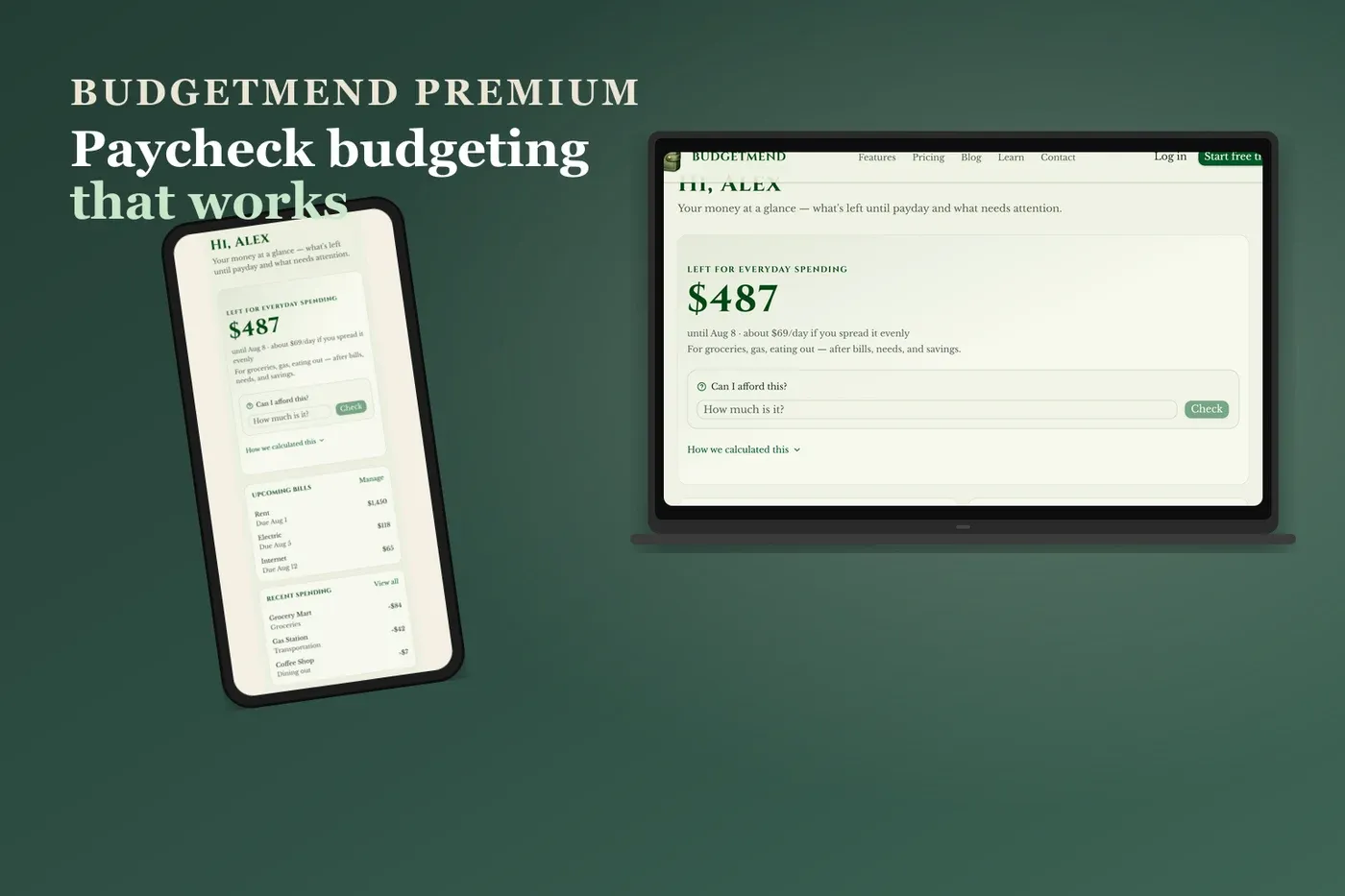
Our system works seamlessly with your paycheck calendar, adjusting to any changes in your pay schedule. Whether you get paid weekly, bi-weekly, or monthly, Budgetmend matches your bills with your income flow, ensuring that your essential expenses are covered while still prioritizing your savings goals. The intuitive interface also highlights your 'safe to spend' amount, giving you peace of mind that your spending won't dip into your emergency reserves.
With Budgetmend, you can focus less on the mechanics of saving and more on growing your emergency fund. Explore our paycheck calendar feature today to see how easy it is to align your savings with your income, ensuring a more secure financial future.
Sources
The following sources informed the methods, formulas, and recommendations in this article.
- Bankrate: Learn how to build an emergency fund even with an irregular income by setting realistic goals and automating savings. https://www.bankrate.com/banking/savings/how-to-build-an-emergency-fund-on-an-irregular-income/
- CFPB: The Consumer Financial Protection Bureau offers tips on saving for emergencies, emphasizing the importance of starting small and automating deposits. https://www.consumerfinance.gov/about-us/blog/start-small-save-regularly-emergency-fund/
- Experian: Discover strategies for creating an emergency fund on a fluctuating income, including prioritizing expenses and using technology to automate savings. https://www.experian.com/blogs/ask-experian/how-to-build-an-emergency-fund-with-irregular-income/
- FDIC: The Federal Deposit Insurance Corporation provides guidance on establishing a savings plan, highlighting the benefits of automatic transfers to build an emergency fund. https://www.fdic.gov/resources/consumers/money-smart/creating-a-savings-plan.html
- Discover: Explore practical advice on how to save for emergencies with an unpredictable paycheck, focusing on setting achievable savings targets. https://www.discover.com/online-banking/savings/emergency-fund-irregular-income/
Frequently asked questions
How much should I save in an emergency fund?
A good rule of thumb is to aim for three to six months' worth of living expenses. However, if you have an irregular paycheck, start with a smaller, more realistic goal like $500 to $1,000. This initial amount can cover minor emergencies and give you a financial cushion. Once you hit this starter goal, gradually increase your savings target as your income allows. Regularly reassess your financial situation and adjust your savings goal to ensure it aligns with your current needs and lifestyle.
What is the best way to save with an irregular income?
Start by calculating your average monthly income over several months to understand your baseline. Set a realistic savings goal based on this average. Use a percentage-based approach, saving a fixed percentage of each paycheck, regardless of its size. This method ensures you contribute to your emergency fund consistently. During months with higher income, consider saving a larger percentage to boost your fund. Always prioritize essential expenses and adjust your savings rate if necessary to maintain financial stability.
Can automation help with saving money?
Yes, automating your savings can significantly enhance your ability to build an emergency fund. Set up automatic transfers from your checking account to a dedicated savings account each time you receive a paycheck. This ensures you consistently save without the temptation to spend the money elsewhere. Automation helps you prioritize savings, making it a regular part of your financial routine. Start with small, manageable amounts and gradually increase them as your comfort with saving grows.
How do I budget with fluctuating income?
Begin by identifying your essential expenses, such as rent, utilities, and groceries, to understand your minimum monthly needs. Create a budget based on your lowest expected income month to ensure you can cover these essentials. During higher income months, allocate extra funds to savings and discretionary spending. Use budgeting tools or apps to track your spending and income patterns. This approach helps you maintain control over your finances and adjust your budget as needed to accommodate income fluctuations.
What tools can assist in building an emergency fund?
Several tools can help you build an emergency fund effectively. Budgeting apps like Mint or YNAB (You Need A Budget) can track your income and expenses, helping you identify areas to cut back and save more. High-yield savings accounts offer better interest rates, allowing your money to grow faster. Consider using a savings app like Qapital or Digit that automatically saves small amounts for you. These tools can simplify the process, making it easier to reach your savings goals even with an irregular income.
Educational disclaimer
This article provides general information and should not be considered financial advice. Please consult a financial advisor for personalized guidance.
Budgetmend provides budgeting tools and educational content. We are not a bank, lender, tax advisor, or investment advisor.
Related articles
More practical guides to help you plan around your paycheck.