Paycheck Planning
How to Build a Paycheck Budget That Actually Sticks
Discover practical steps to create a paycheck budget that truly works, tailored for both biweekly and weekly pay cycles.

Creating a paycheck budget that truly sticks can be a game-changer for anyone looking to gain control over their finances, especially if you're paid biweekly or weekly. According to a 2022 survey by the American Payroll Association, nearly 74% of Americans live paycheck to paycheck, highlighting the urgent need for effective budgeting strategies. A well-structured paycheck budget not only helps in managing day-to-day expenses but also ensures that you can save for future goals without feeling financially strained. By aligning your budget with your pay cycle, you can make more informed financial decisions and avoid the pitfalls of overspending.
The key to success is crafting a budget that is both realistic and adaptable to your lifestyle. This means understanding your income, prioritizing expenses, and setting aside money for savings and unexpected costs. With a paycheck budget, you can allocate funds as soon as they hit your account, ensuring that every dollar has a purpose. Whether you're paid weekly or biweekly, this guide will walk you through the steps to create a budget that aligns perfectly with your pay schedule, helping you achieve financial stability and peace of mind.
- Calculate your total net income for the pay period.
- List all fixed expenses such as rent, utilities, and insurance.
- Allocate funds for variable expenses like groceries and entertainment.
- Set aside a portion for savings or emergency funds.
- Plan for debt repayment, prioritizing high-interest loans.
- Review and adjust your budget as needed for unexpected expenses.
Key Takeaways
Building a paycheck budget that sticks involves understanding your pay cycle, categorizing expenses, prioritizing savings, and adjusting as needed. By tracking your income and expenses, setting realistic goals, and using budgeting tools, you can effectively manage your finances and achieve financial stability.
| Point | Details |
|---|---|
| Point | Details |
| Understand Pay Cycle | Identify whether you receive your paycheck weekly or biweekly to tailor your budget accordingly. |
| Categorize Expenses | Divide expenses into fixed, variable, and discretionary to better manage your spending. |
| Prioritize Savings | Set aside a portion of each paycheck for savings to build financial security. |
| Track Income and Expenses | Regularly monitor your financial inflows and outflows to stay on top of your budget. |
| Adjust as Needed | Be flexible and make adjustments to your budget as your financial situation changes. |
What is Your Pay Cycle and Why Does It Matter?
Understanding your pay cycle is the cornerstone of creating a paycheck budget that truly aligns with your financial reality. Whether you are paid weekly or biweekly, knowing your pay cycle helps you plan your expenses and savings more effectively. A pay cycle refers to the regular schedule on which you receive your paycheck. For example, a biweekly pay cycle means you receive a paycheck every two weeks, while a weekly pay cycle means you are paid once a week. This knowledge is crucial because it determines the flow of your income and directly impacts how you allocate your funds.
Aligning your budget with your pay cycle allows you to anticipate when money will be available and plan your expenses accordingly. For those on a weekly pay cycle, budgeting might involve smaller, more frequent allocations to expenses and savings. On the other hand, a biweekly pay cycle might require a more strategic approach to ensure that funds last for the entire two-week period. By aligning your budgeting strategy with your pay cycle, you can avoid the stress of running out of money before your next paycheck arrives, ensuring that all your financial obligations are met consistently.
Moreover, understanding your pay cycle helps in setting realistic financial goals. If you know when you will receive your income, you can schedule bill payments, savings contributions, and discretionary spending in a way that maximizes your financial stability. This proactive approach minimizes the risk of overspending and helps you stay on track with your financial objectives.
Pro Tip: Take note of any months where you receive an extra paycheck due to your pay cycle. Use this as an opportunity to boost your savings or pay down debt more aggressively.
How Do You Track Your Income and Expenses?
Accurate tracking of income and expenses is the foundation of a successful paycheck budget, ensuring you know exactly where your money goes. Begin by listing all sources of income, including your primary salary, side gigs, and any other regular inflows of cash. For biweekly pay cycles, calculate your total monthly income by multiplying your biweekly paycheck by two and adjusting for any additional income. Weekly pay cycles require a similar approach, multiplying your weekly paycheck by four or five, depending on the number of weeks in the month.
Next, categorize and list all your expenses. Start with fixed expenses such as rent or mortgage payments, insurance premiums, and loan repayments. These are non-negotiable and should be prioritized in your budget. Follow this with variable expenses like groceries, utilities, and transportation, which can fluctuate monthly. Finally, account for discretionary spending, including dining out, entertainment, and hobbies. Tracking these categories will help identify areas where you can cut back if necessary.
To maintain accuracy, use budgeting tools or apps that can link directly to your bank accounts, automatically categorizing your transactions. Alternatively, a simple spreadsheet can suffice if you prefer a more hands-on approach. Regularly update your records to reflect the most current financial situation. This practice not only keeps you informed but also helps in making necessary adjustments to your budget, ensuring it remains effective and aligned with your financial goals.
| Income/Expense Type | Description | Frequency | Tracking Method |
|---|---|---|---|
| Primary Salary | Main source of income from employment | Biweekly/Weekly | Bank Statements |
| Side Gigs | Additional income from freelance or part-time jobs | Varies | Invoices/Receipts |
| Fixed Expenses | Regular payments like rent and loans | Monthly | Bills/Statements |
| Variable Expenses | Fluctuating costs like groceries and utilities | Monthly | Receipts/Budget App |
| Discretionary Spending | Non-essential spending on leisure | Weekly/Monthly | Budget App/Spreadsheet |
How Can You Set Realistic Financial Goals?
Setting realistic financial goals is a crucial step in creating a paycheck budget that truly works for you. These goals serve as a roadmap, guiding your spending and saving decisions. Start by identifying what you want to achieve financially, whether it's paying off debt, saving for a vacation, or building an emergency fund. Be specific about the amounts and timelines to make your goals measurable and attainable.
Once you've identified your goals, prioritize them based on urgency and importance. Breaking down larger goals into smaller, manageable milestones can make them feel less daunting and more achievable. For example, if your goal is to save $1,200 for a vacation in a year, aim to set aside $100 each month. This approach not only keeps you motivated but also helps track your progress effectively.
It's important to regularly review and adjust your financial goals as your circumstances change. Life events such as a job change, a new family member, or unexpected expenses can impact your financial situation, requiring you to reassess your priorities and timelines. Flexibility in your goals allows you to stay on track without feeling overwhelmed.
Pro Tip: Set up automatic transfers to your savings account to ensure you consistently work towards your financial goals without having to think about it each pay period.
What is the Best Way to Allocate Your Funds?
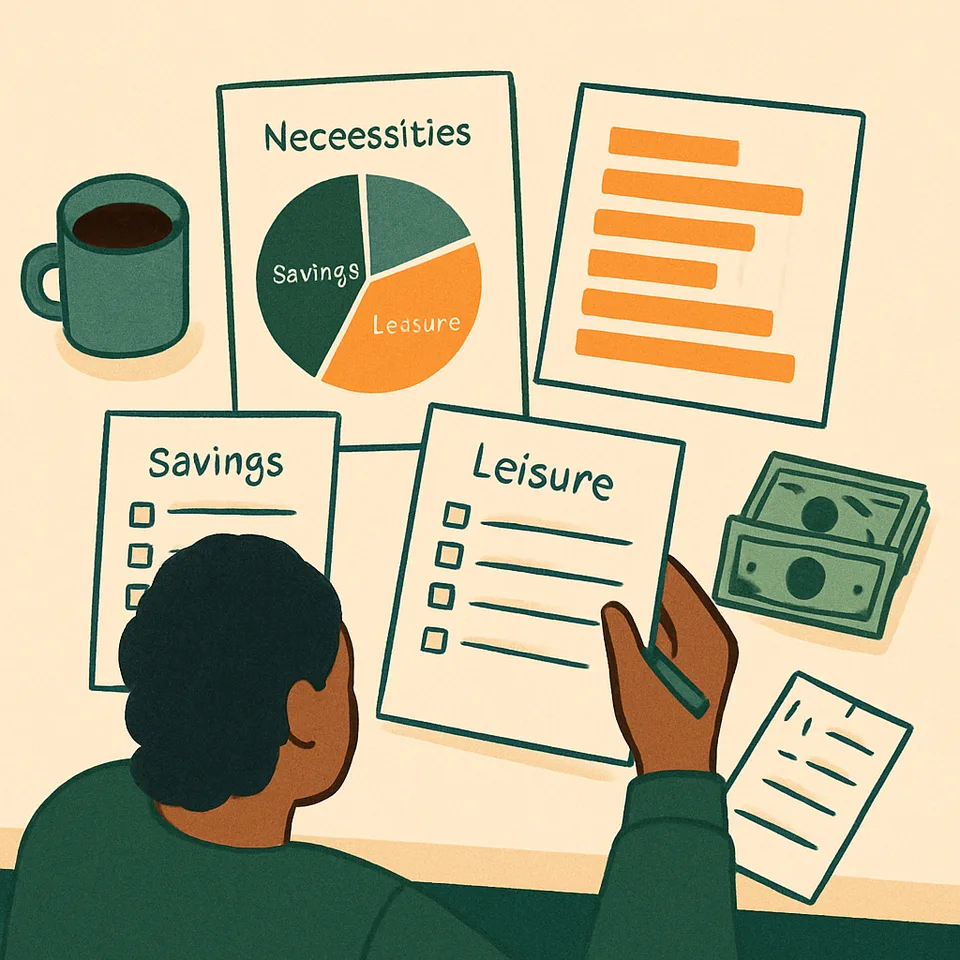
Allocating your funds effectively is a crucial step in creating a paycheck budget that truly works for you. Start by identifying your essential expenses, such as housing, utilities, groceries, and transportation. These are your non-negotiables and should be prioritized to ensure your basic needs are met. Once these are accounted for, consider your financial goals, such as saving for emergencies or paying off debt. Allocating a fixed percentage of your income toward these goals can help you make steady progress over time.
Next, allocate funds for discretionary spending. This includes categories like dining out, entertainment, and hobbies. It's important to set realistic limits in these areas to avoid overspending. A common method is the 50/30/20 rule, where 50% of your income goes to necessities, 30% to discretionary spending, and 20% to savings and debt repayment. Adjust these percentages based on your personal circumstances and financial goals.
Finally, review your allocations regularly. Life circumstances and priorities can change, so it's important to reassess your budget periodically. This ensures that your budget remains aligned with your current needs and goals. By consistently monitoring and adjusting your allocations, you can maintain a balanced and effective paycheck budget.
How Do You Adjust Your Budget When Things Change?
Life is full of surprises, and your paycheck budget should be flexible enough to accommodate unexpected changes. Whether it's a sudden drop in income, an increase in expenses, or a windfall, knowing how to adjust your budget is crucial. Start by regularly reviewing your budget to identify areas where you can cut back or reallocate funds. For instance, if your income decreases, you might need to prioritize essential expenses like rent and groceries while temporarily reducing discretionary spending such as dining out or entertainment.
When your income increases or you receive a bonus, it's tempting to splurge, but consider using this opportunity to bolster your financial security. Allocate a portion of the extra funds to an emergency savings account or pay down high-interest debt. This approach not only strengthens your financial position but also helps you maintain the discipline of sticking to your budget, even when things are going well.
Adjusting your budget is not just about reacting to negative changes. Positive changes, such as a promotion or a decrease in monthly bills, also require thoughtful reallocation. By consistently monitoring your financial situation and making necessary adjustments, you can ensure that your paycheck budget remains effective and aligned with your financial goals.
Pro Tip: Set a reminder to review your budget monthly. This habit allows you to promptly adjust to any changes in your financial situation, keeping your budget relevant and effective.
Budgetmend makes the paycheck-first system automatic
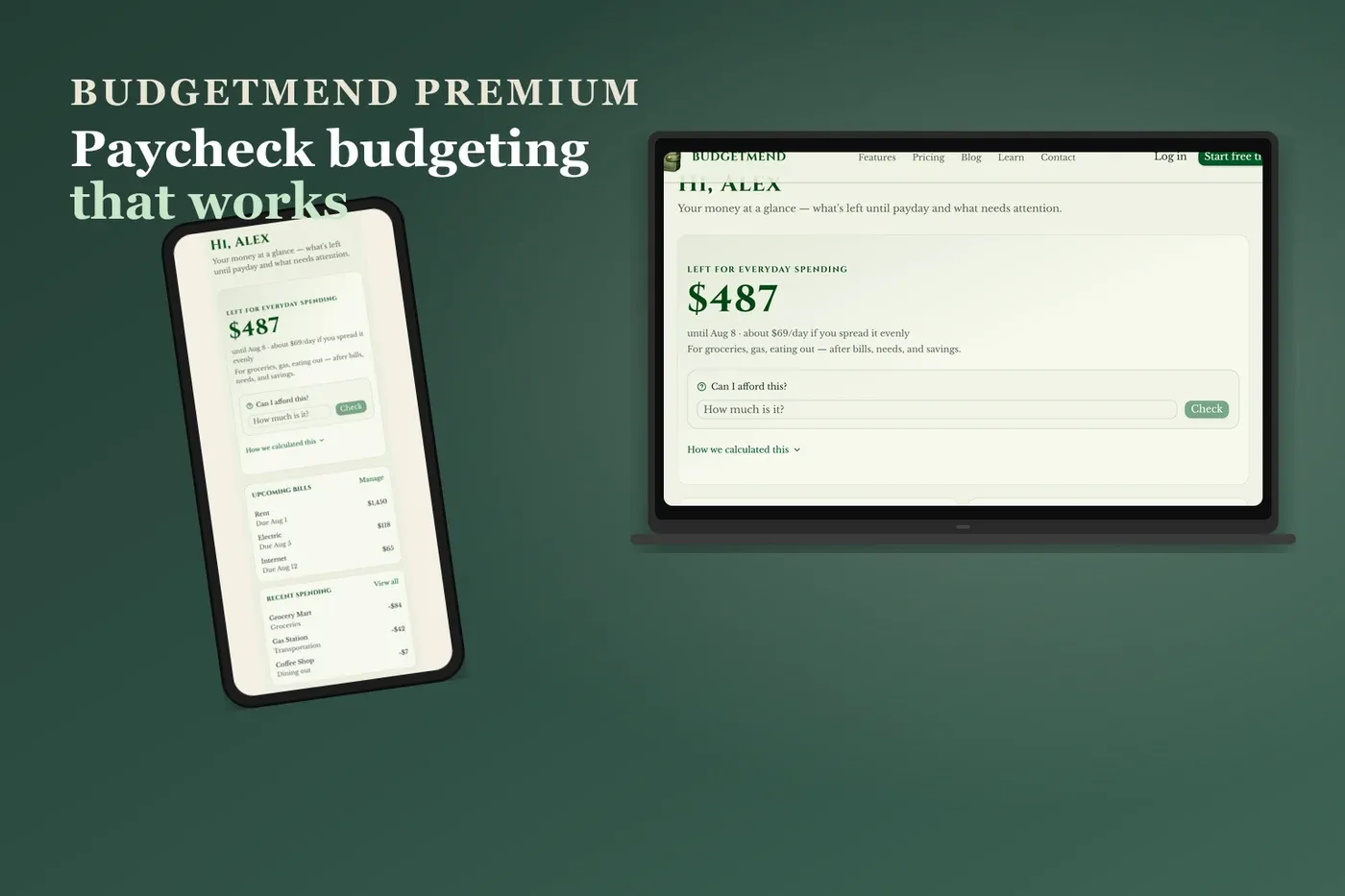
Budgetmend streamlines the paycheck-first system, making it effortless to manage your finances. By automatically aligning your budget with your pay schedule, Budgetmend ensures that every dollar has a purpose from the moment it hits your account. This means you can focus on living your life while your financial plan works seamlessly in the background. No more manual entries or constant adjustments—Budgetmend does the heavy lifting for you.
With features like the paycheck calendar, you can visualize your income flow and plan ahead with confidence. It automatically matches your bills to your paychecks, ensuring that you never miss a due date. This alignment helps you prioritize essential expenses and allocate funds to savings or discretionary spending. Plus, the 'safe to spend' feature gives you a clear picture of what’s available for non-essential purchases, helping you avoid overspending and stay on track with your financial goals.
Explore how Budgetmend can transform your budgeting experience by providing a structured yet flexible approach to paycheck management. Whether you’re paid biweekly or weekly, Budgetmend adapts to your schedule, offering peace of mind and financial clarity. Discover the ease of automated budgeting and take the first step towards financial empowerment.
Sources
The following sources informed the methods, formulas, and recommendations in this article.
- Bankrate: "How to create a budget" - This article provides a comprehensive guide on setting up a budget that works for different pay cycles. https://www.bankrate.com/banking/savings/how-to-create-a-budget/
- CFPB: "How to set a budget" - The Consumer Financial Protection Bureau offers insights into budgeting basics and tips for managing your money effectively. https://www.consumerfinance.gov/about-us/blog/how-to-set-a-budget/
- Experian: "How to Budget Your Money" - Experian explains the importance of budgeting and offers strategies for sticking to a budget. https://www.experian.com/blogs/ask-experian/how-to-budget-your-money/
- Discover: "Budgeting 101: How to Budget Money" - Discover provides a step-by-step guide to budgeting, including tips for those on biweekly and weekly pay cycles. https://www.discover.com/online-banking/banking-topics/budgeting-101-how-to-budget-money/
- FDIC: "Money Smart - A Financial Education Program" - The FDIC offers resources and tools to help individuals create and maintain a budget. https://www.fdic.gov/resources/consumers/money-smart/
Frequently asked questions
What is the difference between biweekly and weekly budgeting?
Biweekly budgeting involves planning your finances based on receiving a paycheck every two weeks, which means you typically get 26 paychecks a year. Weekly budgeting, on the other hand, involves planning based on receiving a paycheck every week, resulting in 52 paychecks annually. The main difference lies in the frequency of income and how expenses are allocated within each cycle. Biweekly budgeting may require more careful planning to manage expenses over a longer period, whereas weekly budgeting allows for more frequent adjustments and can make it easier to handle smaller, recurring expenses.
How can I stick to my paycheck budget?
To stick to your paycheck budget, start by setting realistic goals and tracking your spending. Use budgeting apps or spreadsheets to monitor your expenses and compare them against your budget. Prioritize essential expenses like rent, utilities, and groceries before allocating funds for discretionary spending. Create a buffer for unexpected costs to avoid overspending. Regularly review and adjust your budget to reflect changes in income or expenses. Additionally, consider setting up automatic transfers to savings accounts to ensure you save consistently. Accountability partners or financial advisors can also provide support and motivation to stick to your budget.
What tools can help with paycheck budgeting?
Several tools can assist with paycheck budgeting, including budgeting apps like Mint, YNAB (You Need a Budget), and EveryDollar, which offer features for tracking expenses, setting goals, and managing cash flow. Spreadsheets, such as Excel or Google Sheets, can be customized to create a personalized budgeting system. These tools help visualize spending patterns and identify areas for improvement. Additionally, financial institutions often offer online banking tools that allow you to set up alerts for low balances or upcoming bills. Utilizing these tools can simplify the budgeting process and help you maintain control over your finances.
How do I handle irregular expenses in my paycheck budget?
Handling irregular expenses in your paycheck budget involves planning ahead and setting aside funds each pay period. Start by identifying irregular expenses, such as car maintenance, medical bills, or annual subscriptions. Estimate their costs and divide these amounts by the number of pay periods in a year to determine how much to save each cycle. Create a separate savings account or category within your budget dedicated to these expenses. This approach ensures you're prepared when these costs arise, preventing them from disrupting your regular financial plan. Regularly review and adjust these estimates to reflect actual expenses and avoid shortfalls.
Can I save money on a tight paycheck budget?
Yes, saving money on a tight paycheck budget is possible with strategic planning. Begin by analyzing your spending to identify non-essential expenses that can be reduced or eliminated. Set specific savings goals, even if they are small, to create a habit of saving. Use automatic transfers to move a portion of your paycheck into a savings account before you have a chance to spend it. Consider using cash for discretionary spending to better control your outflow. Additionally, look for ways to increase your income, such as part-time work or selling unused items, to boost your savings potential. Consistency and discipline are key to building savings on a limited budget.
Educational disclaimer
This article is for informational purposes only and should not be considered financial advice. Always consult with a financial advisor for personalized guidance.
Budgetmend provides budgeting tools and educational content. We are not a bank, lender, tax advisor, or investment advisor.
Related articles
More practical guides to help you plan around your paycheck.