Daily Money Habits
Understanding 'Safe to Spend': How to Calculate Your Discretionary Budget
Discover the concept of 'safe to spend' and learn how to calculate it for better financial management of your discretionary spending.

Navigating the complexities of personal finance often boils down to understanding what's 'safe to spend' after you've taken care of your essential expenses. This concept, known as your discretionary budget, is the amount left over after accounting for bills, savings, and other financial goals. According to a 2022 study by the Bureau of Economic Analysis, the average American household spends approximately 70% of their income on necessities, leaving a modest portion for discretionary spending. Accurately calculating this leftover amount is crucial for maintaining financial health and avoiding the stress of living paycheck to paycheck. By mastering this skill, you can confidently manage your finances and enjoy guilt-free spending on the things that bring you joy.
- Calculate your total monthly income to establish a baseline.
- List all fixed expenses, such as rent, utilities, and loan payments.
- Set aside a portion of your income for savings and future financial goals.
- Subtract these fixed expenses and savings from your total income to find your 'safe to spend' amount.
- Review and adjust your discretionary spending as needed to align with your financial priorities.
Key Takeaways
Understanding your 'safe to spend' amount is crucial for effective budgeting. This concept helps you determine how much money you can freely use after accounting for necessary expenses and financial goals. By accurately calculating your discretionary budget, you can enjoy spending without jeopardizing your financial stability or progress towards long-term objectives.
| Point | Details |
|---|---|
| Point | Details |
| Definition | 'Safe to spend' refers to the amount of money available for discretionary spending after covering essential expenses and savings goals. |
| Calculation | Subtract fixed expenses and savings contributions from your total income to determine your discretionary budget. |
| Importance | Knowing your 'safe to spend' amount prevents overspending and helps maintain financial health. |
| Benefits | Allows guilt-free spending on non-essential items and experiences, enhancing quality of life. |
| Implementation | Regularly review and adjust your budget to reflect changes in income, expenses, or financial goals. |
What Does 'Safe to Spend' Mean?
The concept of 'safe to spend' refers to the portion of your income that remains after accounting for essential expenses and financial goals. This is your discretionary spending money, which you can use for non-essential purchases without jeopardizing your financial stability. Understanding what is 'safe to spend' is crucial for maintaining a balanced budget and ensuring that your financial priorities are met before indulging in leisure or luxury expenses.
To calculate your 'safe to spend' amount, start by listing all your fixed expenses, such as rent, utilities, groceries, and transportation costs. Next, allocate funds towards your financial goals, like savings, debt repayment, and investments. The remaining balance is your discretionary budget, which can be used for dining out, entertainment, hobbies, or any other non-essential expenses. This approach helps you avoid overspending and ensures that your financial needs are prioritized.
By consistently monitoring your spending habits and adjusting your budget as necessary, you can maintain a healthy financial lifestyle. This proactive approach not only prevents financial stress but also allows for guilt-free spending, knowing that essential expenses and savings are already covered.
- List fixed expenses to determine essential spending.
- Allocate funds for savings and financial goals.
- Use the remaining balance for discretionary spending.
Pro Tip: Regularly reviewing your budget can help identify areas where you can cut back, increasing your 'safe to spend' amount without compromising your financial goals.
How Can You Calculate Your Discretionary Budget?
Calculating your discretionary budget is a crucial step in understanding what is 'safe to spend' after accounting for all your essential expenses and savings goals. To begin, list all your fixed monthly expenses, such as rent, utilities, and insurance. Next, include variable expenses like groceries and transportation. Subtract the total of these expenses from your monthly income to determine your remaining funds.
The next step is to account for your savings goals. Decide on a percentage of your income that you want to allocate towards savings, whether it's for an emergency fund, retirement, or specific future purchases. Subtract this savings amount from your remaining funds after covering expenses. The amount left is your discretionary budget, which is the money you can safely spend on non-essential items such as dining out, entertainment, or hobbies.
To maintain financial health, regularly review and adjust your budget as your income, expenses, and goals change. This proactive approach ensures that you always know what is safe to spend, helping you avoid overspending and keeping your financial goals on track.
| Step | Action | Example |
|---|---|---|
| 1 | List Fixed Expenses | Rent: $1,200, Utilities: $150 |
| 2 | List Variable Expenses | Groceries: $300, Transportation: $100 |
| 3 | Subtract Total Expenses from Income | Income: $3,000 - Expenses: $1,750 = $1,250 |
| 4 | Allocate Savings | Savings: 20% of Income = $600 |
| 5 | Calculate Discretionary Budget | Remaining: $1,250 - Savings: $600 = $650 |
What Tools and Apps Can Help You Manage Your Budget?
Managing your budget effectively requires the right tools and apps that can streamline the process of tracking your discretionary spending. These digital solutions not only help you understand your 'safe to spend' amount but also ensure that you stay on track with your financial goals. Popular budgeting apps like Mint, YNAB (You Need A Budget), and PocketGuard offer comprehensive features that allow you to monitor your expenses, categorize them, and set spending limits. These apps can automatically sync with your bank accounts, providing real-time updates on your spending habits.
For those who prefer more tailored solutions, apps like Goodbudget and EveryDollar offer envelope budgeting methods, which can be particularly useful for visualizing where your money is going. These apps help you allocate funds for specific categories, ensuring that you don't overspend on non-essential items. Additionally, many of these tools offer alerts and notifications to remind you when you're nearing your spending limits, helping you make more informed financial decisions.
While these tools can significantly aid in managing your budget, it's crucial to choose one that aligns with your personal financial habits and preferences. Experimenting with a few different apps can help you find the best fit for your needs, ultimately enhancing your ability to manage your discretionary spending effectively.
- Mint: Comprehensive tracking and syncing with bank accounts.
- YNAB: Focus on proactive budgeting and financial planning.
- PocketGuard: Simple interface with spending limit alerts.
- Goodbudget: Envelope budgeting for visual spend tracking.
- EveryDollar: Zero-based budgeting approach.
Pro Tip: Start with a free version of a budgeting app to test its features before committing to a paid plan. This way, you can ensure it meets your needs without any financial risk.

What Are Common Mistakes in Discretionary Spending?
Discretionary spending, while crucial for enjoying life, is an area where many people make financial missteps. One common mistake is not accurately distinguishing between needs and wants. This often leads to overspending on non-essential items, under the guise of necessity. To avoid this, it's important to critically evaluate purchases and prioritize spending on items that add genuine value to your life.
Another prevalent error is neglecting to adjust discretionary spending when financial circumstances change. Whether it's a salary increase or an unexpected expense, failing to recalibrate your "safe to spend" amount can lead to financial strain. Regularly reviewing and adjusting your budget can help maintain a healthy balance between spending and saving.
Impulse buying is another pitfall that can derail your discretionary budget. Unplanned purchases, often driven by emotional triggers or persuasive marketing, can quickly eat into your "safe to spend" amount. Implementing a cooling-off period before making non-essential purchases can help curb impulse buying and ensure that spending aligns with your financial goals.
- Confusing needs with wants
- Failing to adjust spending with financial changes
- Impulse buying without planning

How Do You Align Your Spending with Financial Goals?
Aligning your spending with your financial goals is crucial for achieving long-term financial stability and growth. Once you have calculated your 'safe to spend' amount, it's essential to ensure that your discretionary spending aligns with your broader financial objectives. Start by clearly defining your financial goals, whether they involve saving for a home, retirement, or a dream vacation. Understanding your priorities will help you allocate your discretionary funds more effectively.
Next, categorize your discretionary spending to reflect your goals. For instance, if saving for retirement is a priority, consider directing a portion of your 'safe to spend' funds into a retirement account. Similarly, if you aim to accumulate savings for a major purchase, allocate funds accordingly. Regularly reviewing your spending habits can help you stay on track and make adjustments as needed to ensure your spending supports your goals.
Finally, maintain flexibility in your budget to accommodate changes in your financial situation or goals. Life is unpredictable, and your financial priorities may shift over time. By being adaptable and regularly reassessing your financial plan, you can ensure that your spending remains aligned with your evolving objectives.
Pro Tip: Set up automatic transfers to your savings or investment accounts to ensure that your discretionary spending doesn't derail your financial goals. This way, you're prioritizing your future without having to think about it constantly.
Budgetmend makes the paycheck-first system automatic
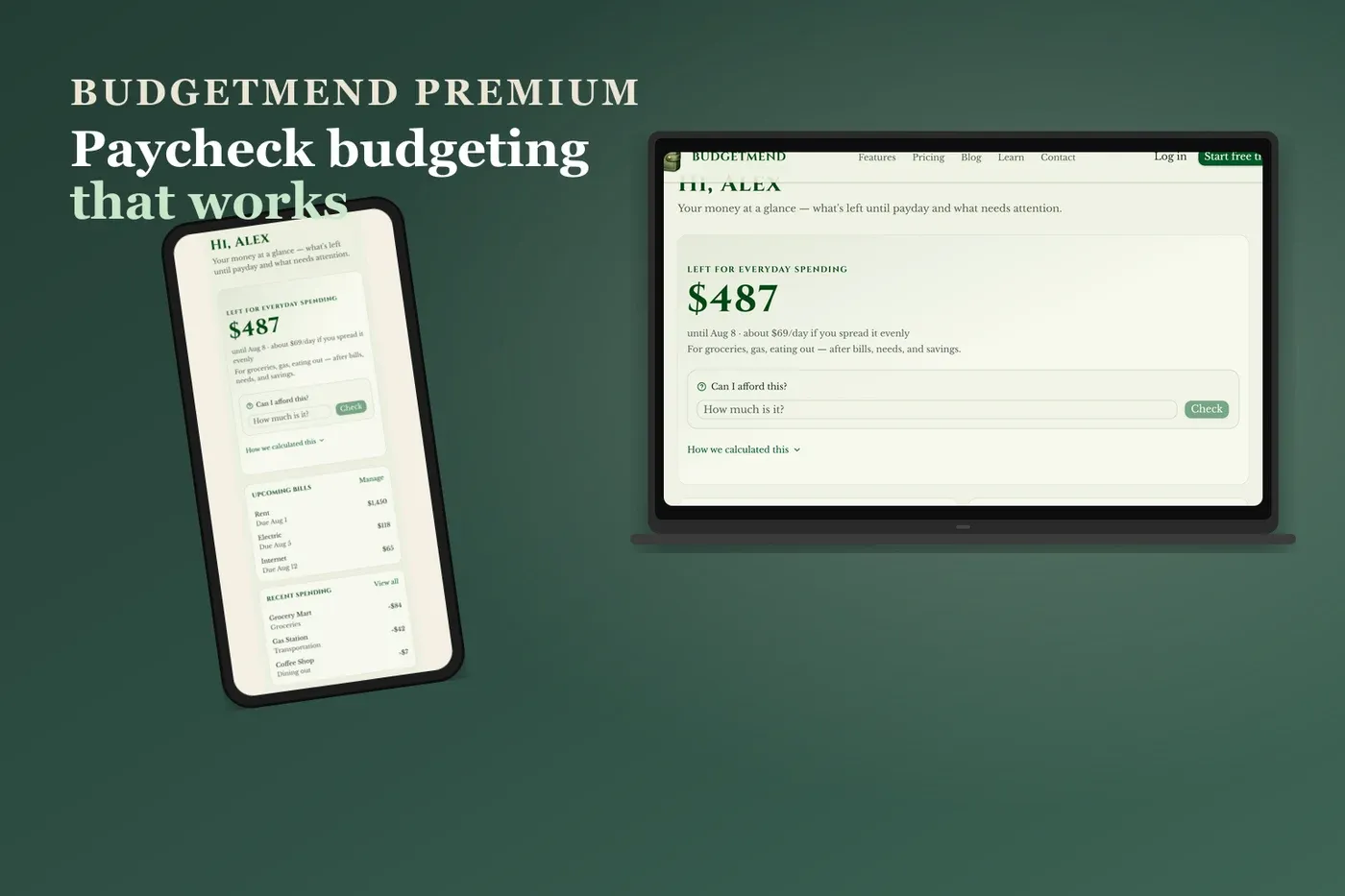
Budgetmend takes the guesswork out of managing your finances by automating the paycheck-first system. This approach ensures that your financial priorities are met as soon as your paycheck arrives. With Budgetmend, your income is immediately allocated to essential bills and savings goals, leaving you with a clear picture of your discretionary funds, or 'safe to spend' amount. This method helps you maintain control over your finances, ensuring that you never spend more than you can afford.
By integrating your paycheck calendar into Budgetmend, you can seamlessly match your income with your bill due dates. This synchronization means that your obligations are covered without any manual effort, reducing the risk of missed payments and late fees. Additionally, Budgetmend's intuitive interface allows you to see your remaining balance at a glance, so you always know how much you have left for discretionary spending. This visibility into your 'safe to spend' amount empowers you to make informed spending decisions throughout the pay period.
Explore how Budgetmend can transform your financial routine by aligning your income with your expenses. With features like paycheck calendar integration and automatic bill matching, managing your money becomes effortless, leaving you with more time to focus on what truly matters.
Sources
The following sources informed the methods, formulas, and recommendations in this article.
- Bankrate: 'How to Budget: A Step-by-Step Guide' - This article provides a comprehensive guide on budgeting, including tips on managing discretionary spending. https://www.bankrate.com/banking/savings/how-to-budget/
- CFPB: 'Your Money, Your Goals: A financial empowerment toolkit' - The Consumer Financial Protection Bureau offers tools and resources to help manage your finances, including understanding discretionary income. https://www.consumerfinance.gov/consumer-tools/educator-tools/your-money-your-goals/
- Experian: 'What Is Discretionary Income?' - Experian explains the concept of discretionary income and how it fits into your overall financial picture. https://www.experian.com/blogs/ask-experian/what-is-discretionary-income/
- Discover: 'How to Create a Budget in 6 Simple Steps' - Discover provides a step-by-step approach to creating a budget, highlighting the importance of identifying discretionary spending. https://www.discover.com/credit-cards/resources/how-to-create-a-budget/
- FDIC: 'Money Smart - A Financial Education Program' - The FDIC offers educational resources that include managing discretionary spending as part of a broader financial strategy. https://www.fdic.gov/resources/consumers/money-smart/
Frequently asked questions
How do I determine what is safe to spend?
To determine what is 'safe to spend,' start by listing all your essential expenses such as rent, utilities, groceries, and debt payments. Next, allocate funds for savings and financial goals like retirement or an emergency fund. Subtract these from your total monthly income to find your discretionary budget. This remaining amount is what you can safely spend on non-essential items like dining out, entertainment, or hobbies. Regularly review and adjust your budget to account for changes in income or expenses, ensuring your discretionary spending aligns with your financial goals.
What percentage of income should be discretionary spending?
A common guideline is to allocate about 20% of your income to discretionary spending. This rule is part of the 50/30/20 budgeting method, where 50% of your income goes to needs, 30% to wants (discretionary spending), and 20% to savings and debt repayment. However, the exact percentage can vary based on personal financial goals and obligations. It's crucial to balance your discretionary spending with your long-term financial objectives, ensuring you have enough set aside for savings and debt reduction before indulging in non-essential purchases.
Can budgeting apps help with safe to spend calculations?
Yes, budgeting apps can significantly aid in calculating your 'safe to spend' amount. These apps typically allow you to input your income, fixed expenses, and savings goals, automatically calculating your discretionary budget. They also provide real-time tracking of your spending, helping you stay within your limits. Many apps offer features like alerts for overspending and visual reports, making it easier to understand your financial habits. By using a budgeting app, you can make informed decisions about your discretionary spending, ensuring it aligns with your financial goals.
Why is it important to track discretionary spending?
Tracking discretionary spending is crucial for maintaining financial health and achieving long-term goals. It helps you identify spending patterns and areas where you might be overspending, allowing you to adjust your habits accordingly. By keeping a close eye on your discretionary expenses, you can ensure that you are living within your means and not jeopardizing essential savings or debt repayment plans. Additionally, tracking helps prevent impulse purchases that can derail your budget, promoting a more mindful and intentional approach to spending.
What are the benefits of knowing your safe to spend amount?
Knowing your 'safe to spend' amount provides financial clarity and peace of mind. It ensures you have a clear understanding of how much money is available for discretionary purchases without compromising essential expenses or savings goals. This knowledge helps prevent overspending and reduces financial stress, allowing you to enjoy your discretionary spending guilt-free. Additionally, it promotes better financial decision-making and encourages a balanced lifestyle, where you can enjoy your money while still working towards long-term financial security.
Educational disclaimer
This article is for informational purposes only and should not be considered financial advice. Please consult with a financial advisor for personalized advice.
Budgetmend provides budgeting tools and educational content. We are not a bank, lender, tax advisor, or investment advisor.
Related articles
More practical guides to help you plan around your paycheck.