Smart Spending
Meal Planning on a Budget: Less Waste, Lower Grocery Stress
Meal planning can save money and reduce waste. Learn how to align it with your paycheck schedule for efficient budgeting.

The average American household spends over $7,000 annually on food, with a significant portion going to waste. Effective meal planning can drastically cut these costs and reduce food waste, making it a smart move for anyone looking to optimize their budget. By aligning meal planning with your paycheck schedule, you can ensure that every dollar is well spent and every meal is accounted for.
To help you get started, here’s a checklist you can implement by your next payday. These steps will help you create a meal plan that fits your budget and reduces stress at the grocery store.
- Review your current grocery spending habits.
- Identify meals you frequently enjoy and can cook easily.
- Create a shopping list based on planned meals.
- Allocate a specific grocery budget per paycheck.
- Plan meals around sales and seasonal produce.
Key Takeaways
Meal planning on a budget involves strategic steps to minimize costs and waste. By aligning your meal planning with your paycheck schedule, you can effectively manage your grocery spending and reduce stress. This approach not only helps in cutting down on unnecessary expenses but also fosters a healthier lifestyle by encouraging home-cooked meals over takeout. Additionally, it supports sustainable living by reducing food waste, which is a growing concern globally.
| Point | Details |
|---|---|
| Review Spending | Analyze past grocery bills to understand spending patterns. |
| Plan Favorite Meals | List meals that are easy to prepare and enjoyed by your family. |
| Budget Allocation | Set a specific amount for groceries per paycheck cycle. |
| Use Sales and Seasons | Plan meals around current sales and seasonal produce. |
| Create Shopping Lists | Draft a list based on your planned meals to avoid impulse buys. |
Review Your Grocery Spending
Before diving into meal planning, it's crucial to understand your current grocery spending habits. Look at your past three months of grocery receipts or bank statements. Identify patterns, such as frequent purchases or items that often go to waste. This analysis will help you pinpoint areas where you can cut costs. For example, if you notice that you regularly throw out expired vegetables, you might need to adjust the quantity you purchase or find recipes that use those ingredients more frequently.
Consider using a budgeting app or spreadsheet to categorize your spending. This will provide a clearer picture of where your money is going and help you set realistic goals for reducing expenses. By tracking your spending, you can also identify trends, such as increased spending during holiday seasons, and plan accordingly.
Pro Tip: Use a budgeting app to track your grocery spending automatically and identify trends over time.
Identify Meals You Frequently Enjoy
List meals that you and your family enjoy and can prepare quickly. These should be meals that are both budget-friendly and easy to cook. Consider incorporating a mix of protein, vegetables, and grains to ensure nutritional balance. For instance, a simple stir-fry with chicken, broccoli, and rice can be both economical and nutritious.
Having a go-to list of meals simplifies the planning process and reduces decision fatigue. Rotate these meals weekly to keep things interesting while sticking to your budget. You can also categorize meals based on preparation time, making it easier to choose meals that fit your schedule on busy days.
Pro Tip: Include one new recipe each week to gradually expand your meal options without overwhelming your budget.
Create a Shopping List Based on Planned Meals
Once you've identified your meals, create a shopping list that includes all necessary ingredients. This list should be based on your weekly meal plan and adjusted for any sales or seasonal produce. For example, if strawberries are in season and on sale, consider incorporating them into your breakfast or dessert options.
A well-organized shopping list helps you avoid impulse purchases and ensures you only buy what you need. This not only saves money but also reduces food waste. Additionally, organizing your list by store layout can save time during your shopping trip, as you can avoid backtracking through aisles.
Pro Tip: Organize your shopping list by store section to streamline your grocery trip and avoid unnecessary aisles.
Allocate a Specific Grocery Budget Per Paycheck
Determine how much you can realistically spend on groceries each paycheck. This budget should be based on your total income and other financial obligations. Allocating a specific amount helps you stay within your means and prevents overspending. For a family of four, this might mean setting aside $100-$150 per week, depending on your income and location.
Consider setting aside a small portion of your grocery budget for unexpected expenses, such as a last-minute dinner party or a new recipe you want to try. This flexibility can prevent stress and allow you to enjoy spontaneous culinary adventures without derailing your budget.
| Paycheck Frequency | Suggested Grocery Budget |
|---|---|
| Weekly | 10-15% of weekly income |
| Biweekly | 10-15% of biweekly income |
| Monthly | 10-15% of monthly income |
Plan Meals Around Sales and Seasonal Produce
Take advantage of sales and seasonal produce to maximize your grocery budget. Check weekly flyers and online promotions to find deals on items you regularly purchase. For instance, if chicken breasts are on sale, plan to incorporate them into several meals that week.
Incorporating seasonal fruits and vegetables not only saves money but also adds variety to your meals. Seasonal produce is often fresher and more nutritious, enhancing the flavor and health benefits of your dishes. Additionally, buying in bulk during sales can be a great way to stock up on pantry staples like rice or pasta.
Pro Tip: Use store loyalty programs and digital coupons to further reduce your grocery bill.
Budgetmend Makes the Paycheck-First System Automatic
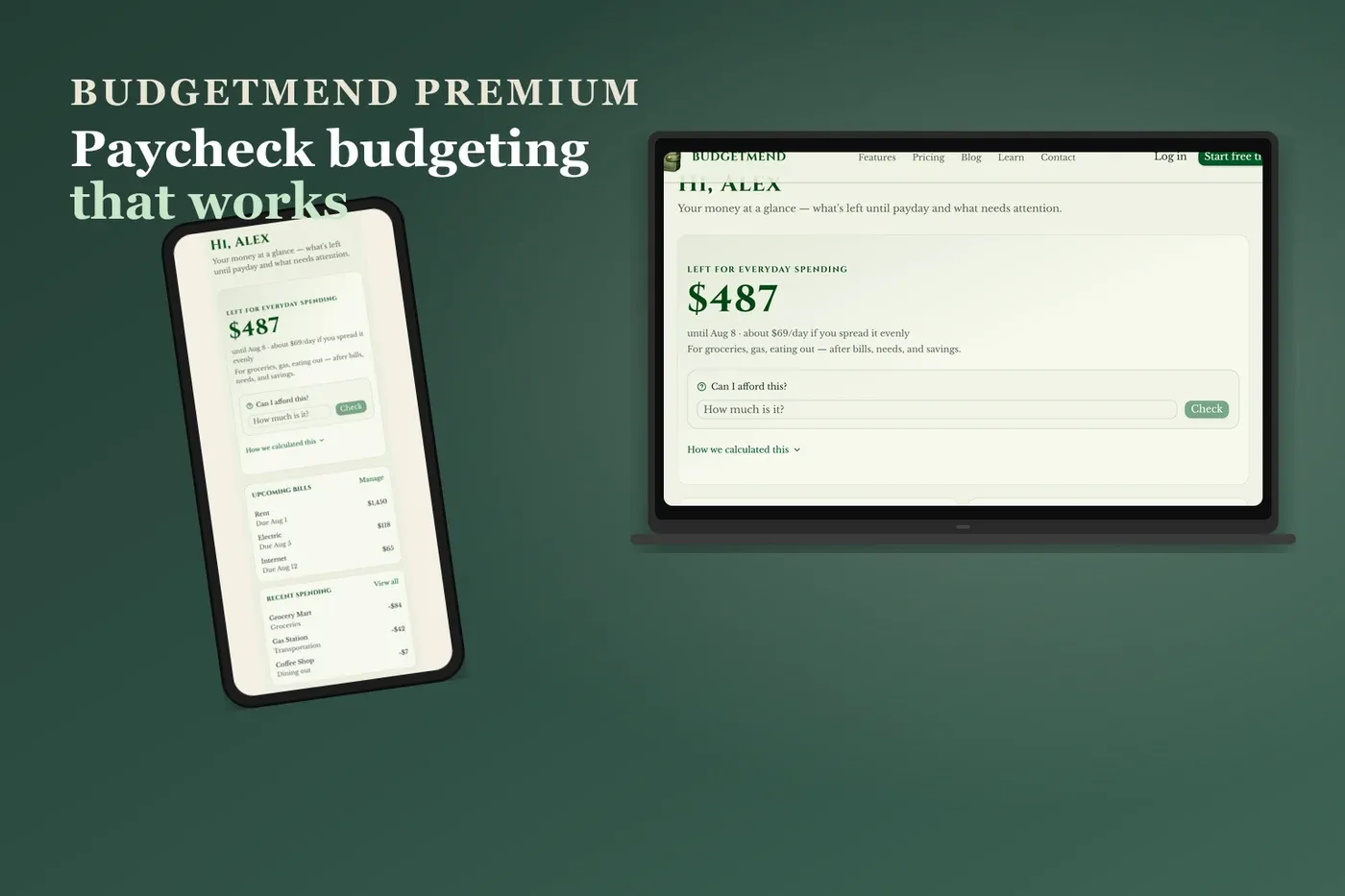
Budgetmend simplifies the budgeting process by aligning your financial planning with your paycheck schedule. With its intuitive paycheck-first system, Budgetmend helps you allocate funds for groceries, bills, and savings automatically. This ensures that you have a clear overview of your finances and can make informed decisions about spending.
The app features a paycheck calendar that matches your income with expenses, ensuring you never miss a bill or overspend. Budgetmend's safe-to-spend feature gives you real-time insights into your available funds, helping you make informed spending decisions. By automating these processes, Budgetmend reduces the time and stress associated with manual budgeting, allowing you to focus on other important aspects of your life.
Sources
Here are some reputable sources for further reading on meal planning and budgeting.
- https://www.bankrate.com
- https://www.consumerreports.org
- https://www.usda.gov
- https://www.nytimes.com
- https://www.forbes.com
Frequently asked questions
How can I start meal planning on a budget?
Begin by reviewing your current grocery spending to identify patterns. List meals you enjoy and can prepare easily, then create a shopping list based on those meals. Allocate a specific grocery budget per paycheck and plan meals around sales and seasonal produce. Start small by planning a few meals a week and gradually increase as you become more comfortable with the process.
How much should I budget for groceries?
A good rule of thumb is to allocate 10-15% of your income for groceries. Adjust this percentage based on your personal financial situation and family size. For example, a single person might spend less than a family of four. Consider factors like dietary needs and regional cost differences when setting your budget.
What are the benefits of meal planning?
Meal planning helps reduce food waste, save money, and decrease grocery shopping stress. It ensures you have a clear plan for meals, which can lead to healthier eating habits and more efficient use of your time and resources. Additionally, it can foster creativity in the kitchen as you experiment with new recipes and ingredients.
Educational disclaimer
This article provides general information for educational purposes and does not constitute financial advice. Please consult a financial advisor for personalized advice.
Budgetmend provides budgeting tools and educational content. We are not a bank, lender, tax advisor, or investment advisor.
Related articles
More practical guides to help you plan around your paycheck.