Smart Spending
How to Compare Grocery Prices Without Losing Your Mind
Discover stress-free methods to compare grocery prices and make smart spending decisions for your family. Save money with these practical tips.

In today's fast-paced world, managing a family budget can feel like a daunting task, especially when it comes to grocery shopping. With prices fluctuating and a plethora of options available, it's easy to get overwhelmed trying to compare grocery prices effectively. According to a recent study, the average American family spends over $4,000 annually on groceries, making it one of the largest household expenses. But fear not, with the right strategies and habits, you can master the art of smart spending without losing your mind or sacrificing quality. By adopting efficient receipt habits and learning how to strategically compare prices across stores, families can save hundreds of dollars each year and make their next shopping trip a breeze.
- Analyze your last three grocery receipts to identify recurring purchases and price variations.
- Create a simple spreadsheet or use a grocery app to track prices at different stores for your top 10 frequently bought items.
- Set aside time each week to review store flyers and digital coupons to plan your shopping list strategically.
- Consider joining store loyalty programs to gain access to exclusive discounts and promotions.
- Schedule your shopping trips during off-peak hours to avoid impulse buying and take your time comparing prices.
Key Takeaways
Effectively comparing grocery prices can lead to significant savings for families. By adopting smart receipt habits and using strategic store comparisons, families can manage their grocery budgets without stress. Utilizing tools like price tracking apps and maintaining a detailed shopping list can further streamline the process, ensuring that families get the best value for their money.
| Point | Details |
|---|---|
| Point | Details |
| Receipt Habits | Keep and review receipts to track spending patterns and identify potential savings. |
| Store Comparison | Visit multiple stores to compare prices on frequently purchased items. |
| Price Tracking Apps | Use apps to monitor price changes and find deals. |
| Shopping List | Maintain a detailed list to avoid impulse purchases and focus on essentials. |
| Budget Management | Set a grocery budget and stick to it by planning meals and shopping accordingly. |
What Are Receipt Habits and Why Do They Matter?
Receipt habits refer to the practice of regularly reviewing and analyzing your grocery receipts to gain insights into your spending patterns. By examining your receipts, you can identify which items you purchase most frequently, how much you spend on different categories of groceries, and where your money is going each month. This habit is crucial for families aiming to manage their grocery budgets effectively, as it provides a clear picture of their spending behaviors and highlights areas where they might cut costs without sacrificing quality or nutrition.
Understanding your receipt habits can also help you compare grocery prices more efficiently. By keeping track of the prices of items you frequently buy, you can quickly spot price changes or differences between stores. This information allows you to make informed decisions about where to shop and which products to buy in bulk when they are on sale. Over time, these small adjustments can lead to significant savings, helping your family stick to a budget and allocate funds to other important areas.
Moreover, receipt habits can alert you to any unnecessary purchases or impulse buys that may be inflating your grocery bill. By identifying these patterns, you can make more mindful choices and develop strategies to avoid them in the future, such as creating a shopping list and sticking to it.
Pro Tip: Keep a dedicated folder or digital app to store and organize your grocery receipts. This will make it easier to track your spending habits over time and spot trends or areas for improvement.
How Do You Choose the Right Stores for Your Needs?
Selecting the right grocery stores for your needs is a crucial step in effectively comparing grocery prices. Start by identifying the stores in your area and consider their proximity to your home or workplace. This will help you save on travel costs and time, making your shopping experience more efficient. Additionally, it's important to evaluate the store's pricing structure. Some stores offer competitive prices on staple items, while others may excel in offering discounts on bulk purchases. By understanding each store's pricing tendencies, you can better align your shopping habits with your budgetary goals.
Another factor to consider is the variety and quality of products offered by each store. Some stores may have a wider selection of organic or specialty items, which could be important if you have specific dietary requirements or preferences. It's also beneficial to pay attention to the store's loyalty programs or membership benefits, which can provide additional savings through discounts, coupons, or cashback offers. By weighing these factors, you can prioritize stores that not only meet your financial needs but also cater to your family's preferences and lifestyle.
Lastly, consider the overall shopping experience provided by each store. Customer service, store layout, and checkout efficiency can significantly impact your shopping trips. A store that offers a pleasant shopping environment can make the process of comparing grocery prices less stressful and more enjoyable. Keep these considerations in mind as you make your decision, ensuring that the stores you choose align with both your budget and personal shopping preferences.

What Tools Can Help You Compare Prices Effectively?
In today's digital age, numerous apps and online platforms can make comparing grocery prices a breeze. These tools are designed to help you find the best deals without the hassle of manually sifting through flyers or visiting multiple stores. Price comparison apps like Flipp and Basket allow you to scan barcodes or search for products to instantly see prices across various local stores. These apps often include features like digital coupons and shopping lists, which can further streamline your grocery shopping experience.
Another effective tool is the use of browser extensions like Honey or PriceBlink, which can alert you to price drops or available discounts when shopping online. While primarily used for general online shopping, these extensions can be adapted for grocery purchases from stores that offer online shopping services. Additionally, many grocery stores have their own apps that provide exclusive deals and allow you to compare their in-store prices with competitors.
For those who prefer a more hands-on approach, spreadsheets can be a powerful tool. By keeping a simple spreadsheet of frequently purchased items and their prices at different stores, you can easily spot trends and identify which store offers the best overall savings for your grocery list.
Pro Tip: Set alerts on your favorite price comparison apps for items you purchase regularly. This way, you'll be notified of price drops or special promotions, ensuring you never miss a deal.
How Do You Create an Effective Grocery Budget?
Creating an effective grocery budget begins with understanding your family's specific needs and preferences. Start by analyzing your past grocery receipts to identify patterns in spending. This will help you pinpoint areas where you may be overspending or buying items that are not essential. Consider the dietary requirements and preferences of your family members, such as any allergies or favorite foods, to ensure your budget reflects these needs. By having a clear picture of what your family truly consumes, you can set a realistic baseline for your grocery budget.
Once you've assessed your past spending habits, set a monthly or weekly budget that is both attainable and flexible. It's important to account for fluctuations, such as seasonal produce prices or special occasions that may require additional spending. To avoid overspending, allocate a portion of your budget to different categories like fresh produce, proteins, and pantry staples. This categorization can help you make more informed decisions when shopping and ensure that you are prioritizing essential items.
Finally, continually monitor and adjust your budget as needed. Keep track of your spending throughout the month and compare it against your set budget. This practice will not only help you stay within your financial limits but also allow you to adapt to any changes in your family's needs or grocery prices. Remember, an effective grocery budget is not static; it evolves with your family's lifestyle and financial situation.

How Can You Compare Prices Across Different Stores?
Comparing grocery prices across different stores can seem daunting, but with a structured approach, it becomes manageable and even rewarding. Start by selecting a list of staple items that your family frequently purchases, such as milk, bread, eggs, and fresh produce. These items can serve as a baseline for comparison. Visit the websites or apps of local grocery stores to check their current prices for these staples. Note any sales or discounts that might affect the overall cost.
Another effective strategy is to use a price comparison app or website that aggregates prices from various stores. These tools can provide a quick overview of which store offers the best deals on your selected items. Additionally, consider joining loyalty programs at different stores, as they often provide exclusive discounts and promotions that can lower your grocery bill.
To keep track of your findings, create a simple spreadsheet or table to record prices. This method allows you to easily spot trends and identify which store consistently offers the best prices for your needs. Regularly updating this information will help you make informed decisions and adjust your shopping habits accordingly.
Pro Tip: Schedule your grocery shopping trips after reviewing weekly ads to maximize savings and ensure you're always getting the best deals.
| Store | Milk (Gallon) | Bread (Loaf) | Eggs (Dozen) | Apples (Per lb) |
|---|---|---|---|---|
| Store A | $3.50 | $2.00 | $2.50 | $1.20 |
| Store B | $3.00 | $2.20 | $2.30 | $1.50 |
| Store C | $3.75 | $1.80 | $2.70 | $1.10 |
| Store D | $3.20 | $2.10 | $2.40 | $1.30 |
Why Should You Track Your Savings Over Time?
Tracking your savings over time is an essential practice for anyone serious about improving their grocery shopping strategy. By monitoring how much you save, you gain valuable insights into your spending habits and can identify patterns or trends that may not be immediately obvious. This ongoing record helps you understand where your money goes and highlights areas where you can make further improvements. Moreover, seeing the tangible results of your efforts can be incredibly motivating, encouraging you to continue refining your approach to grocery shopping.
Another significant benefit of tracking savings is the ability to set realistic and achievable financial goals. By having a clear picture of your past savings, you can set benchmarks for future shopping trips and work towards specific targets. This not only makes the process of budgeting more effective but also allows you to celebrate small victories along the way, reinforcing positive spending habits. Furthermore, tracking savings over time can help you adapt to changes in your financial situation, ensuring that your grocery shopping strategy remains aligned with your overall financial goals.
Lastly, monitoring your savings enables you to compare the effectiveness of different shopping strategies. As you experiment with various techniques, such as shopping at different stores or using coupons, tracking your savings allows you to measure the impact of these changes. This data-driven approach ensures that you are making informed decisions and continually optimizing your grocery shopping to maximize savings. Ultimately, by keeping a close eye on your savings, you empower yourself to make smarter financial choices and improve your family's overall financial well-being.
- Gain insights into spending habits and identify trends.
- Set realistic financial goals and celebrate achievements.
- Adapt to financial changes while maintaining effective strategies.
- Compare the effectiveness of different shopping techniques.
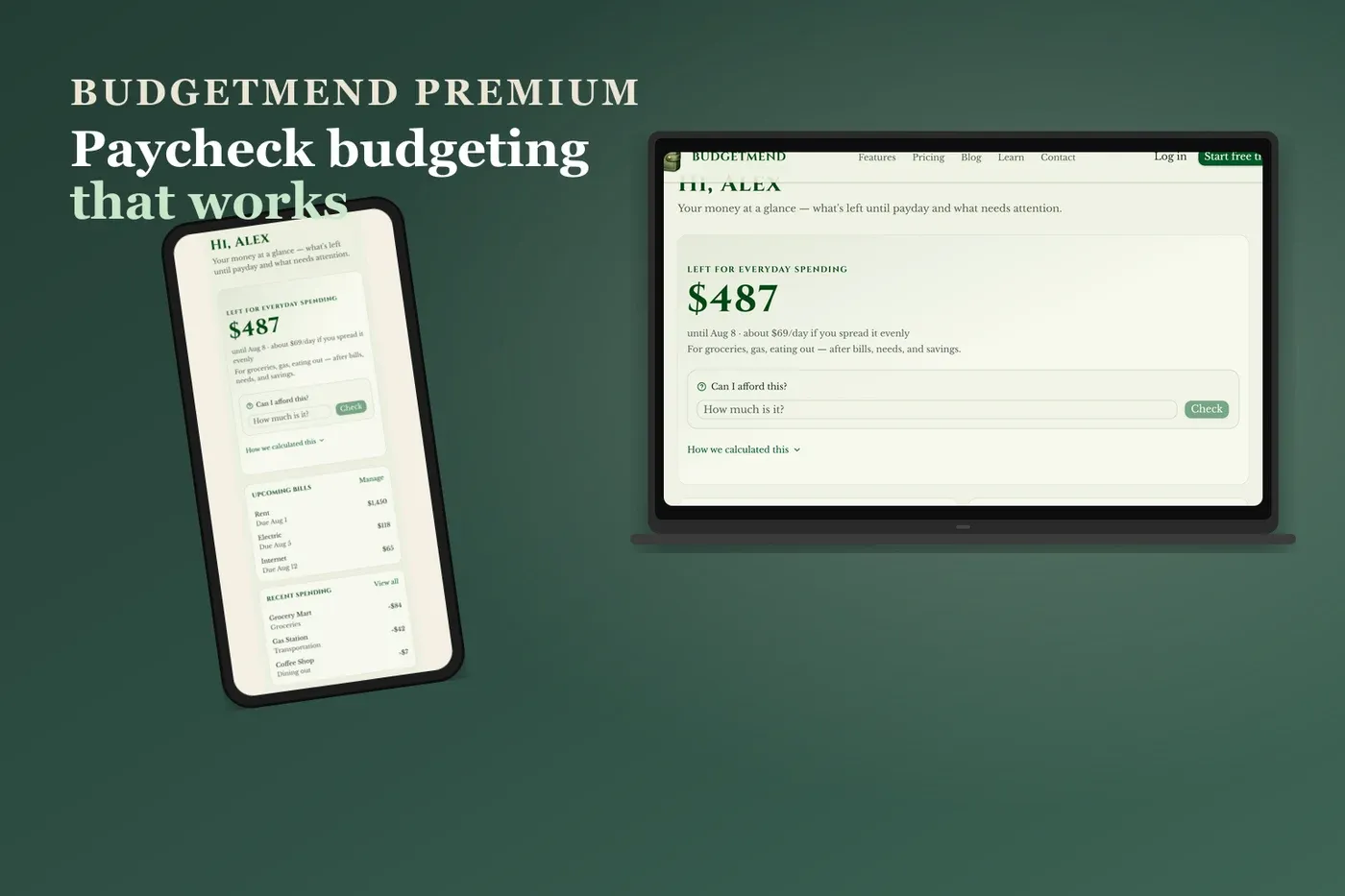
Budgetmend makes the paycheck-first system automatic
Budgetmend takes the hassle out of managing your finances by automating the paycheck-first system. Once you set up your account, the app seamlessly integrates with your paycheck calendar, ensuring that your funds are allocated correctly as soon as they're deposited. This means you can focus less on manual budgeting and more on what truly matters to you. The system intelligently matches your bills to your income schedule, so you never have to worry about missing a payment or scrambling to cover an unexpected expense.
With Budgetmend, every dollar is accounted for. The app tracks your expenses and categorizes them in real-time, providing you with a clear picture of your 'safe to spend' amount. This feature helps you make informed spending decisions without the stress of overspending. You can rest easy knowing that your essential expenses are covered and that you have a clear plan for any discretionary spending.
Explore how Budgetmend can simplify your financial life by aligning with your paycheck calendar, ensuring bill matching, and providing a clear view of your safe to spend funds. Let Budgetmend handle the details so you can focus on living your life with financial peace of mind.
Sources
The following sources informed the methods, formulas, and recommendations in this article.
- Bankrate: "How to save money on groceries: 17 tips" - https://www.bankrate.com/personal-finance/smart-money/how-to-save-money-on-groceries/
- Experian: "How to Save Money on Groceries" - https://www.experian.com/blogs/ask-experian/how-to-save-money-on-groceries/
- Consumer Financial Protection Bureau (CFPB): "How to make a budget" - https://www.consumerfinance.gov/consumer-tools/budgeting/
- Discover: "10 Ways to Save Money on Groceries" - https://www.discover.com/credit-cards/resources/save-money-on-groceries/
- FDIC: "Money Smart for Adults: Spending Tracker" - https://www.fdic.gov/resources/consumers/money-smart/adult.html
Frequently asked questions
What are the best apps for comparing grocery prices?
To effectively compare grocery prices, consider using apps like Flipp, Basket, and ShopSavvy. Flipp aggregates weekly ads and coupons from local stores, allowing you to compare prices and find deals. Basket lets you search for products and compare prices across different stores in real-time. ShopSavvy offers barcode scanning to quickly check prices and reviews. These apps can help streamline your shopping process, ensuring you get the best deals without having to manually check each store's prices. Regularly updating and using these apps can lead to significant savings over time.
How can I save money on groceries for a large family?
For large families, buying in bulk can lead to substantial savings. Consider joining warehouse clubs like Costco or Sam's Club, where you can purchase items in larger quantities at lower per-unit costs. Meal planning is another effective strategy; plan meals around sales and seasonal produce to maximize savings. Use coupons and loyalty programs to get discounts and cashback. Additionally, cooking from scratch and avoiding pre-packaged foods can cut costs. Engage the whole family in meal prep to make it more efficient and enjoyable, and stick to a shopping list to avoid impulse buys.
What is the easiest way to track grocery expenses?
Tracking grocery expenses can be simplified by using budgeting apps like Mint or You Need A Budget (YNAB). These apps allow you to categorize your spending, set budgets, and track your expenses in real-time. Alternatively, you can use a simple spreadsheet to log each grocery trip, noting the date, store, and total amount spent. Regularly reviewing these records helps identify spending patterns and areas where you can cut back. For a more hands-on approach, keep all your grocery receipts in an envelope and tally them weekly to stay on top of your budget.
How often should I review my grocery budget?
Reviewing your grocery budget should be a regular task, ideally on a monthly basis. This frequency allows you to adjust for any changes in your financial situation or grocery prices. Monthly reviews help you track spending patterns, identify areas for improvement, and set realistic goals for the following month. If you experience significant changes in income or expenses, consider reviewing your budget more frequently, such as bi-weekly. Regular reviews ensure you stay on track with your financial goals and can adapt quickly to any changes in your household needs or market conditions.
Are there specific days when groceries are cheaper?
Yes, certain days can offer better deals on groceries. Many stores restock and offer new sales mid-week, typically on Wednesdays. This is often when weekly ads and promotions start, making it a good day to shop for fresh deals. Additionally, some stores offer special discounts on specific days, such as senior discounts or double coupon days. It's advisable to check with your local grocery stores to understand their sales cycles. Shopping later in the evening can also yield discounts on perishable items like baked goods and produce, as stores aim to clear out inventory before closing.
Educational disclaimer
This article is for informational purposes only and should not be considered financial advice. Always consult with a financial advisor for personalized guidance.
Budgetmend provides budgeting tools and educational content. We are not a bank, lender, tax advisor, or investment advisor.
Related articles
More practical guides to help you plan around your paycheck.