three paycheck months 2026
Three-Paycheck Months in 2026: Exact Dates and How to Plan
Discover the three-paycheck months in 2026 and learn how to plan effectively for these extra paydays. Maximize your earnings!

If your first 2026 paycheck arrived on January 2, your three-paycheck months are January (extra check: January 30) and July (extra check: July 31). If your first paycheck arrived on January 9, your three-paycheck months are May (extra check: May 29) and October (extra check: October 30). Those are the only two patterns for biweekly workers in 2026, according to Bankrate’s paycheck calendar.
Not sure which pattern is yours? Check your first pay stub or bank deposit from January. That date tells you everything.
- Jan. 2 start: extra paychecks land on January 30 and July 31
- Jan. 9 start: extra paychecks land on May 29 and October 30
- Any other January start date: use the step-by-step method in Section 3 to map your own schedule
One thing worth knowing upfront: a three-paycheck month is not a raise. It is a calendar quirk. A standard biweekly schedule produces 26 pay periods per year, but 2026 is one of those years where the math creates a 27th pay date for some workers. Your annual salary does not automatically increase. Dominion Payroll explains that the extra pay date often results from a holiday-shifted payday moving into the prior calendar year, not from any change in your employment contract.
Why do three-paycheck months happen in 2026?
A year has 52 weeks plus one or two extra days. Biweekly pay runs on a 14-day cycle, which produces exactly 26 pay periods in most years. But 26 periods multiplied by 14 days equals 364 days, not 365. That one-day gap accumulates, and every few years the calendar alignment pushes a third paycheck into two specific months.
In 2026, the shift is more pronounced because a pay date that would normally fall on January 1, 2027 (a federal holiday) gets processed on December 31, 2026 instead. That administrative move, not a contract change, is what creates the 27th pay date for some payroll calendars.
A few things this does NOT mean:
- It is not a bonus. Your employer did not add money to your compensation package.
- It is not automatic extra annual pay. Depending on how your employer handles payroll, your per-check amount may be slightly lower to keep annual gross the same.
- It does not affect everyone equally. Salaried and hourly workers may see different treatment, and benefit deductions can vary.
Littler’s payroll brief confirms that employers have real flexibility here, which is exactly why you should verify your own payroll policy before planning around the extra check.
How to calculate your own three-paycheck months
This method works for any biweekly worker, regardless of which weekday you get paid.
Step-by-step:
- Find your first 2026 paycheck date. Check your bank statement or pay stub for the first deposit of the year. Write it down.
- Add 14 days repeatedly. From that first date, count forward 14 days at a time and list every pay date through December 31, 2026.
- Group dates by month. Any month that contains three of those dates is a three-paycheck month for you.
- Mark the extra date. The third paycheck in that month is your “extra” one for planning purposes.
Worked example (Jan. 2 start):
Starting January 2, the pay dates run: Jan. 2, Jan. 16, Jan. 30, Feb. 13, Feb. 27, Mar. 13… and so on. January already has three dates (Jan. 2, Jan. 16, Jan. 30), so January 30 is the extra paycheck. Continuing the sequence, July lands on Jul. 3, Jul. 17, and Jul. 31, making July 31 the second extra paycheck of the year.
Pro Tip: Open a Google Sheet, type your first pay date in cell A1, then enter =A1+14 in A2 and drag it down through 27 rows. Group by month using a simple MONTH() formula. You will have your full 2026 pay calendar in under five minutes.
You can also verify your pattern by checking NewsNation’s 2026 paycheck guide for a quick cross-reference once you have your first date confirmed.
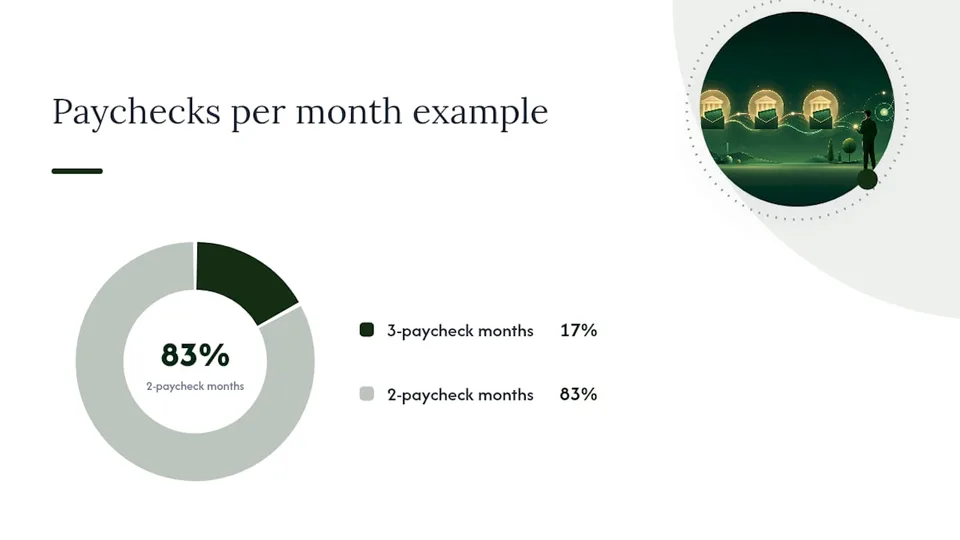
Quick-reference table: 2026 three-paycheck dates by first paycheck
| First 2026 Paycheck | Three-Paycheck Months | Extra Paycheck Dates |
|---|---|---|
| January 2 | January and July | January 30 and July 31 |
| January 9 | May and October | May 29 and October 30 |
Source: Bankrate
If your first paycheck fell on a date other than January 2 or January 9, use the step-by-step method above to map your own schedule. The logic is identical: start from your actual first pay date and count forward in 14-day increments.
A few additional things to keep in mind:
- Holiday shifts matter. If your employer moves a payday that falls on a federal holiday, your actual deposit date may differ by one business day. Always check your employer’s official 2026 payroll calendar.
- Direct deposit timing varies. Some banks post deposits a day early; others post exactly on the scheduled date. Your “extra” paycheck may appear slightly before or on the listed date.
- Confirm with payroll. If you are unsure whether your employer’s schedule matches the standard biweekly cadence, ask HR or check your payroll portal for the full 2026 pay schedule.
Practical ways to use an extra paycheck in 2026
Yahoo Finance advises treating a three-paycheck month as a planned cash-flow event, not a windfall. The distinction matters because unplanned windfalls tend to disappear into everyday spending. A planned allocation does not.
Priority uses, in order:
- Emergency fund first. If you do not have three to six months of expenses saved, direct the extra check here before anything else.
- High-interest debt. Credit card balances above 15% APR cost more per day than most savings accounts earn per month. A lump payment accelerates payoff significantly.
- Retirement or HSA contributions. A one-time bump to a 401(k) or health savings account compounds over time in a way a single purchase never will.
- Prepay recurring bills. Cover next month’s rent, utilities, or insurance early to free up breathing room in your regular budget.
- Sinking funds. Car maintenance, holiday gifts, annual subscriptions — these are predictable expenses that catch people off guard. Fund them now.
- Invest. Once the above are covered, a low-cost index fund or high-yield savings account (compare current rates at FDIC’s national rate tables) is a reasonable next step.
Three example allocation plans:
Pick the plan that fits your current situation and apply it before the paycheck hits your checking account.
Pro Tip: Set up an automatic transfer on payday itself — not the day after, not “when you get around to it.” Schedule it for the same day the deposit clears. Money that moves automatically never gets spent accidentally.

Payroll and employer policy caveats to check first
Before you build a plan around the extra paycheck, verify a few things with your payroll department or HR. This is not optional if you are salaried.
Confirm these specifics:
- How does your employer divide annual salary? Some divide by 27 in a 27-paycheck year, making each check slightly smaller. Others keep the biweekly rate the same and issue a true extra check.
- How are benefit deductions handled? Many employers spread deductions across the first 24 or 26 paychecks and skip the 27th. That means your extra check may be larger than usual, but it is not a permanent increase.
- Will taxes be withheld normally? Federal and state withholding still apply to every paycheck, including the extra one. Do not assume a larger net deposit without confirming the gross amount first.
- Are you exempt/salaried? HRP’s payroll brief notes that FLSA salary threshold compliance can be affected when a 27th pay period changes the effective weekly rate. Salaried employees should pay particular attention.
Key insight: Employers legally may recalculate your biweekly rate to keep annual gross pay the same across 27 periods. That is not a pay cut — it is a payroll adjustment. But it does mean your extra paycheck may be smaller than your regular ones. Confirm the method your employer uses before the pay date arrives.
What to ask HR or payroll:
- “Can you send me the full 2026 payroll calendar?”
- “How does the company handle the 27th pay period for salaried employees?”
- “Will benefit deductions come out of all 27 checks or just the first 26?”
Get the answers in writing or pull the payroll calendar directly from your employer’s payroll portal. Littler’s analysis makes clear that employer approaches vary widely, so a general rule does not substitute for your specific company’s policy.
Pro Tip: Request the 2026 payroll calendar in writing now, before the extra pay date arrives. A quick email to payroll takes two minutes and removes all the guesswork.
How a paycheck-aware budgeting app makes extra-paycheck months easier
Most budgeting apps assume you get paid on the 1st and 15th. If you are biweekly, that assumption breaks your budget before the month even starts. A paycheck-based app works differently: it schedules your plan around your actual pay dates, not a generic monthly cycle.
For a three-paycheck month, that distinction is especially useful. Here is what the right features look like in practice:
- Paycheck scheduling: the app knows when each paycheck lands and recalculates your “safe to spend” amount from that date forward.
- Automatic transfer rules: set a rule once (e.g., 40% to savings, 30% to debt) and the app applies it every time a paycheck hits, including the extra one.
- Bill matching: bills are matched to the paycheck that will cover them, so you can see exactly which check pays which bill without manual math.
- Sinking fund automation: recurring goals (car fund, holiday budget) accumulate automatically from each paycheck, not from a monthly lump sum you may or may not have.
- Rescue Mode: if you overspend in a regular month, the app helps you recover without judgment before the next paycheck arrives.
A practical workflow for a three-paycheck month: when the extra paycheck is scheduled in the app, the transfer rules fire automatically. Savings go to the emergency fund, a debt payment goes to the credit card, and the remainder covers a prepaid bill. You make one decision once, and the app handles the rest every time that pattern repeats.
Worth knowing: manual entry and optional bank linking are both available in paycheck-aware apps, so you control how much financial data you share. Privacy does not have to be the tradeoff for automation.
The smartest way to treat a three-paycheck month
The most common mistake with an extra paycheck is treating it like found money. It is not. It was always part of your annual earnings — the calendar just delivered it in a lump instead of spreading it across two months.
The approach that actually works: decide the allocation before the paycheck arrives. Write down the percentages, set the transfers, and commit to the plan in advance. When the deposit clears, the money moves automatically and you never have to make the decision under the pressure of a full checking account.
A concrete example: on a $2,800 extra paycheck, a balanced split could put a majority into an emergency fund, a substantial portion toward credit card debt, some into a sinking fund for car maintenance, and a smaller portion as discretionary spending. That single allocation could shave months off a debt payoff timeline and fully fund a car repair fund in one move.
Plan it ahead. The extra paycheck is a real opportunity — but only if you treat it like one.
Budgetmend helps you plan around every paycheck, including the extra ones
Biweekly workers with three-paycheck months need a budgeting tool that actually understands pay timing. Budgetmend is built for exactly that: it schedules your budget around your real pay dates, not a generic monthly calendar.
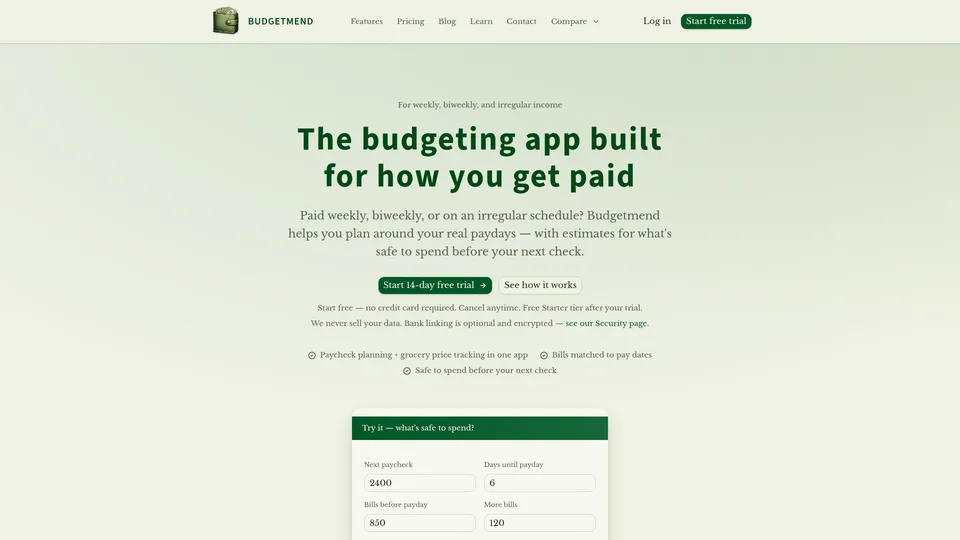
With Budgetmend, you set your paycheck schedule once and the app calculates your safe-to-spend amount from each deposit forward. Automatic transfer rules handle the extra paycheck the same way they handle every other one — savings, debt, and bills get allocated on payday without any manual work. You can link your bank account optionally for real-time updates, or enter everything manually if you prefer to keep your data private. Either way, the paycheck-based structure stays intact.
The free Starter tier is available with no time limit. A 14-day free trial unlocks the full Premium feature set, including sinking fund automation, bill matching, and Rescue Mode for months when spending runs over. Start your free trial at Budgetmend and have your extra-paycheck plan ready before the deposit clears.
Sources
- Here’s How to Use an Extra Paycheck This Month | Bankrate
- Employers That Pay Biweekly May Have 27 Paydays in 2026. Are You Ready? | Littler
- When are the three-paycheck months and how to make them work | Yahoo Finance
- An Extra Paycheck: Navigating 2026’s 27-Payroll Year | Dominion Payroll (blog)
- Preparing for an extra biweekly payroll period in 2026 | HRP (HR brief)
This article is general information, not a substitute for advice from a qualified financial advisor. Consult a qualified financial professional about your own circumstances before acting on anything here.
Educational disclaimer
Budgetmend provides budgeting tools and educational content for educational purposes only.
Budgetmend provides budgeting tools and educational content. We are not a bank, lender, tax advisor, or investment advisor.
Related articles
More practical guides to help you plan around your paycheck.