
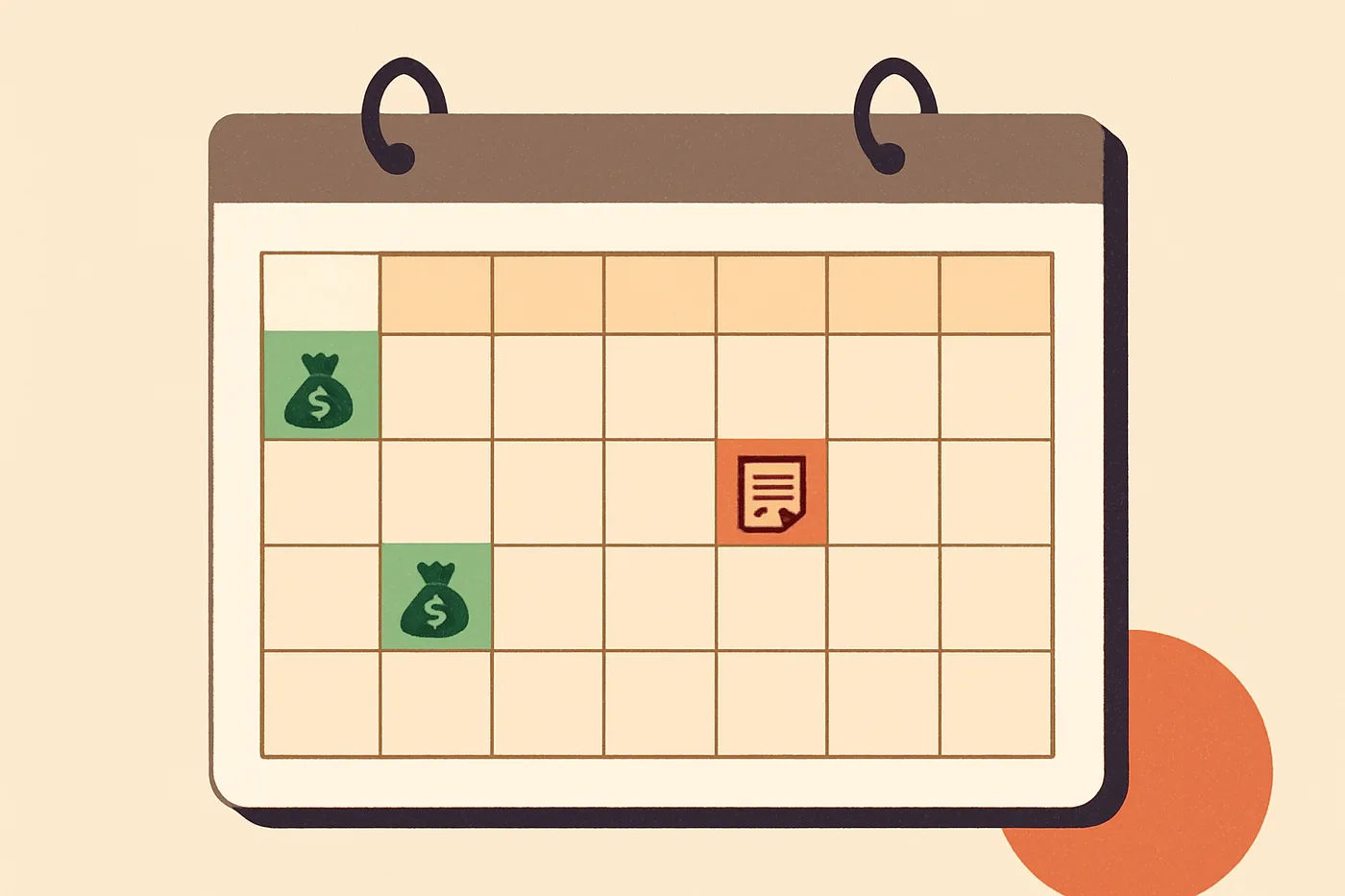
How to budget when paid every two weeks
Two paychecks don't always fit a calendar month. Plan each pay period on its own.
The moment
March felt great. Marcus got three paychecks instead of two and treated it like a 50% raise — dinners out, a new jacket, an extra streaming service. Then April arrived with only two checks, rent unchanged, and his checking account $400 lighter than he expected.
He didn't overspend in April. He overspent in March by spending money that belonged to April's bills. Biweekly pay isn't monthly pay divided by two — it's a rhythm you have to plan around.
34.1%
Private-sector workers paid biweekly (2023)
Source: U.S. Bureau of Labor Statistics
Why biweekly pay breaks monthly budgets
About one-third of U.S. private-sector workers are paid biweekly, according to the U.S. Bureau of Labor Statistics. That means some calendar months include three paychecks while others include only two — even though rent and many bills stay on a monthly schedule.
If you average your income across a month, you can feel flush in three-paycheck months and short in two-paycheck months. Planning paycheck by paycheck keeps cash timing honest.
Treat each paycheck as its own mini-budget
For every deposit, ask: which bills are due before the next check, and how much daily spending is safe after those bills clear?
- Mark your next two pay dates on a calendar alongside bill due dates.
- Fund only the bills due in the current pay period — not the whole month at once unless cash allows.
- In three-paycheck months, assign the extra check to savings, debt, or annual costs before lifestyle spending expands.
- Use Paycheck Plan in Budgetmend to see safe-to-spend per day until the next deposit.
Example: three-paycheck month
Marcus earns $1,850 per check. In a normal two-check month that's $3,700. In a three-check month it's $5,550 — but his rent ($1,400) and fixed bills don't change.
The smart move: route the entire third check ($1,850) to priorities that don't fit in a normal month — car insurance renewal, holiday gifts, or an extra debt payment. That's $85 per paycheck if he spreads the same annual goals across every check instead of only in bonus months.
Keeping everyday categories steady and sending the bonus check to planned priorities prevents the next two-check month from feeling like a crash.
Ready to try it with your numbers?
Set up paycheck plan in Budgetmend
Create a free account to apply what you just read — assign your next paycheck, track safe-to-spend, and keep going.
Create free accountCommon mistakes
- Dividing monthly bills by two and funding the full amount every paycheck even when a bill isn't due yet — cash gets locked up or spent elsewhere.
- Treating the third paycheck as fun money instead of pre-funding the lean months ahead.
- Using a monthly budget app that doesn't show what's safe to spend today between deposits.
Your action step
Set your pay frequency and next paycheck date in Settings, then review Paycheck Plan. Confirm which bills hit before your next deposit and adjust category assignments for this period only.
Up next
Paycheck budgeting vs. monthly budgeting
Budgetmend plans around pay periods — whether you get paid weekly, biweekly, or once a month. Here's why that matters and how monthly pay fits in.
Read next lessonKeep learning
Sources & further reading
These lessons cite official U.S. government and federal research sources. Always verify current guidance on the publisher's site.
Put this lesson into practice
Create a free Budgetmend account to assign dollars paycheck by paycheck, track safe-to-spend, and open Paycheck Plan with your real numbers.