Debt
Debt Snowball vs Avalanche: Which Fits Your Pay Schedule?
Choosing between the debt snowball and avalanche methods can be tricky. This article helps you decide which fits your pay schedule best with practical examples and tips.

When it comes to tackling debt, choosing the right repayment strategy can make a significant difference in how quickly you become debt-free. The debt snowball and avalanche methods are two popular approaches, each with its own merits. The snowball method focuses on paying off smaller debts first, providing quick wins and a psychological boost. In contrast, the avalanche method targets debts with the highest interest rates, potentially saving you more money over time. But how do these strategies align with your pay schedule? Understanding the nuances of each can help you decide which method fits best with your financial rhythm, ensuring that your debt repayment plan is both effective and sustainable.
- List all your debts, including balances and interest rates.
- Determine your monthly income and fixed expenses to see what's available for debt repayment.
- Identify the smallest debt balance for the snowball method or the highest interest rate for the avalanche method.
- Align your debt payments with your paycheck schedule to maintain consistency.
- Set up automatic payments to avoid missed payments and late fees.
- Regularly review your progress and adjust your strategy as needed.
Key Takeaways
The debt snowball and avalanche methods offer distinct strategies for debt repayment, each aligning differently with various pay schedules. The snowball method focuses on quick wins by paying off the smallest debts first, while the avalanche method targets high-interest debts for long-term savings. Understanding your paycheck timing can help determine which approach maximizes financial efficiency and motivation.
| Point | Details |
|---|---|
| Point | Details |
| Debt Snowball | Prioritizes paying off the smallest debts first to gain quick psychological wins and momentum. |
| Debt Avalanche | Focuses on paying off debts with the highest interest rates first to minimize total interest paid. |
| Paycheck Timing | Aligns debt payments with your pay schedule to ensure consistent and manageable payments. |
| Motivation | The snowball method can boost motivation with quick successes, while the avalanche method requires patience but offers long-term savings. |
| Financial Efficiency | Choosing the right method based on pay schedule can enhance financial efficiency and debt repayment speed. |
What is the Debt Snowball Method?
The Debt Snowball Method is a debt repayment strategy that focuses on paying off your smallest debts first, regardless of interest rate. This approach aims to build psychological momentum by allowing you to experience quick wins, which can be incredibly motivating. By tackling the smallest balances, you gain a sense of achievement and encouragement to continue your debt repayment journey. This method is particularly beneficial for those who need tangible progress to stay motivated.
To implement the Debt Snowball Method, begin by listing all your debts in order from the smallest balance to the largest. Continue making minimum payments on all your debts, but allocate any extra funds towards the smallest debt. Once you've paid off the smallest debt, take the amount you were paying on that debt and apply it to the next smallest debt. This process creates a 'snowball' effect, where the amount you can put towards each subsequent debt grows larger as you eliminate smaller debts.
Pro Tip: If you're paid bi-weekly, align your snowball payments with your paycheck schedule to ensure consistent progress and avoid missing payments.

How Does the Debt Avalanche Method Work?
The debt avalanche method is a strategic approach to debt repayment that prioritizes paying off debts with the highest interest rates first. This method is particularly effective for individuals looking to minimize the total interest paid over time, thus potentially saving more money in the long run. By focusing on high-interest debts, borrowers can reduce the overall cost of their debt more efficiently compared to other methods. The process involves listing all debts, sorting them by interest rate from highest to lowest, and directing any extra payments towards the debt with the highest interest rate while making minimum payments on the rest.
One of the key advantages of the debt avalanche method is its emphasis on financial efficiency. By targeting high-interest debts first, you reduce the speed at which interest accumulates, which can significantly lower the total amount paid over the life of the debts. This method requires discipline and patience, as it may take longer to see the complete payoff of individual debts compared to the debt snowball method, which focuses on the smallest balances first. However, the long-term savings can be substantial, especially for those with large balances on high-interest credit cards or loans.
When aligning the debt avalanche method with your pay schedule, it's important to account for how frequently you receive income. If you get paid bi-weekly, for example, you might choose to make two smaller payments each month rather than one larger payment. This can help manage cash flow and ensure that you are consistently chipping away at the highest interest debt, maximizing the method’s effectiveness.
Pro Tip: Set up automatic payments aligned with your pay schedule to ensure you never miss a payment and consistently target high-interest debts, enhancing the benefits of the debt avalanche method.
How Does Your Pay Schedule Affect Debt Repayment?
Your pay schedule can significantly influence how effectively you can implement either the debt snowball or avalanche methods. If you're paid bi-weekly, you receive 26 paychecks a year, as opposed to the 12 you receive if paid monthly. This difference can affect the timing and amount of payments you can make towards your debts. With a bi-weekly schedule, you might find it easier to make frequent, smaller payments, which aligns well with the debt snowball method. This method focuses on paying off the smallest debts first, allowing you to quickly gain momentum and motivation as you see debts disappearing from your list more frequently.
Conversely, a monthly pay schedule might be better suited for the debt avalanche method, which targets debts with the highest interest rates first. Since you receive fewer paychecks, you can plan larger lump-sum payments each month to tackle high-interest debts more aggressively. This approach can save you more money on interest over time, but it requires discipline and patience, as it may take longer to see the number of debts decrease.
Ultimately, understanding the nuances of your pay schedule can help you decide which method aligns better with your financial situation and psychological preferences. By matching your debt repayment strategy to your income flow, you can optimize your efforts and potentially achieve debt freedom more efficiently.
| Pay Schedule | Debt Snowball | Debt Avalanche | Considerations |
|---|---|---|---|
| Bi-weekly | Frequent small payments | Possible if disciplined | Easier to manage with small debts |
| Monthly | Less frequent payments | Ideal for larger, high-interest debts | Requires planning for larger payments |
| Semi-monthly | Twice a month payments | Can be adapted for either | Balance between bi-weekly and monthly |
| Weekly | Very frequent payments | Challenging but possible | Best for very small debts |
| Irregular | Adjustable payments | Flexible but requires tracking | Needs careful budgeting |
Which Method Suits Your Paycheck Timing?
When choosing between the debt snowball and avalanche methods, your pay schedule can significantly influence which strategy is more effective for you. Let's consider two scenarios: Jane, who is paid bi-weekly, and Mark, who receives a monthly paycheck. Jane opts for the debt snowball method, focusing on paying off her smallest debts first. With her bi-weekly pay schedule, she can make more frequent payments, which helps her see quick wins and stay motivated. Each paycheck allows her to knock out small debts, boosting her confidence and keeping her momentum going.
On the other hand, Mark chooses the debt avalanche method, prioritizing debts with the highest interest rates. Since he is paid monthly, he has the advantage of making larger payments once a month, which can significantly reduce the interest costs over time. For Mark, the avalanche method aligns well with his pay schedule, as it allows him to allocate a substantial portion of his monthly income towards tackling high-interest debts, ultimately saving him money in the long run.
Both methods have their pros and cons depending on your pay schedule. The debt snowball method offers quick wins with more frequent payments, which can be motivating, especially for those with bi-weekly paychecks. Conversely, the debt avalanche method is often more cost-effective for individuals like Mark, who have a monthly income and can make larger, less frequent payments. Ultimately, the choice between debt snowball vs avalanche should consider both your financial situation and your pay schedule to maximize efficiency and motivation in debt repayment.
How to Choose the Right Method for You?
Choosing the right debt repayment method between the debt snowball and avalanche approaches involves a careful evaluation of your financial situation and personal preferences. Start by assessing your current financial health, including your total debt amount, interest rates, and monthly income. The debt snowball method is often favored by those who thrive on quick wins and need motivation from seeing debts disappear rapidly. In contrast, the avalanche method typically appeals to individuals who are focused on minimizing the total interest paid over time, as it targets high-interest debts first.
Personal preferences play a significant role in deciding which method aligns with your financial goals. If you value psychological boosts and need frequent encouragement, the snowball method might be more suitable. On the other hand, if you're more analytical and driven by numbers, the avalanche method could be the better choice. Consider your discipline level and how you handle financial stress, as these factors can influence your commitment to either strategy.
Additionally, take into account your pay schedule. If you receive irregular income, the flexibility of the snowball method might be more manageable, allowing you to adjust payments as funds become available. Conversely, if your income is stable and predictable, the avalanche method can be systematically implemented with precision.
Pro Tip: Regularly review your progress and financial situation to ensure your chosen method remains effective. Adjust your strategy if your financial circumstances change or if you find another method more motivating.
Budgetmend makes the paycheck-first system automatic
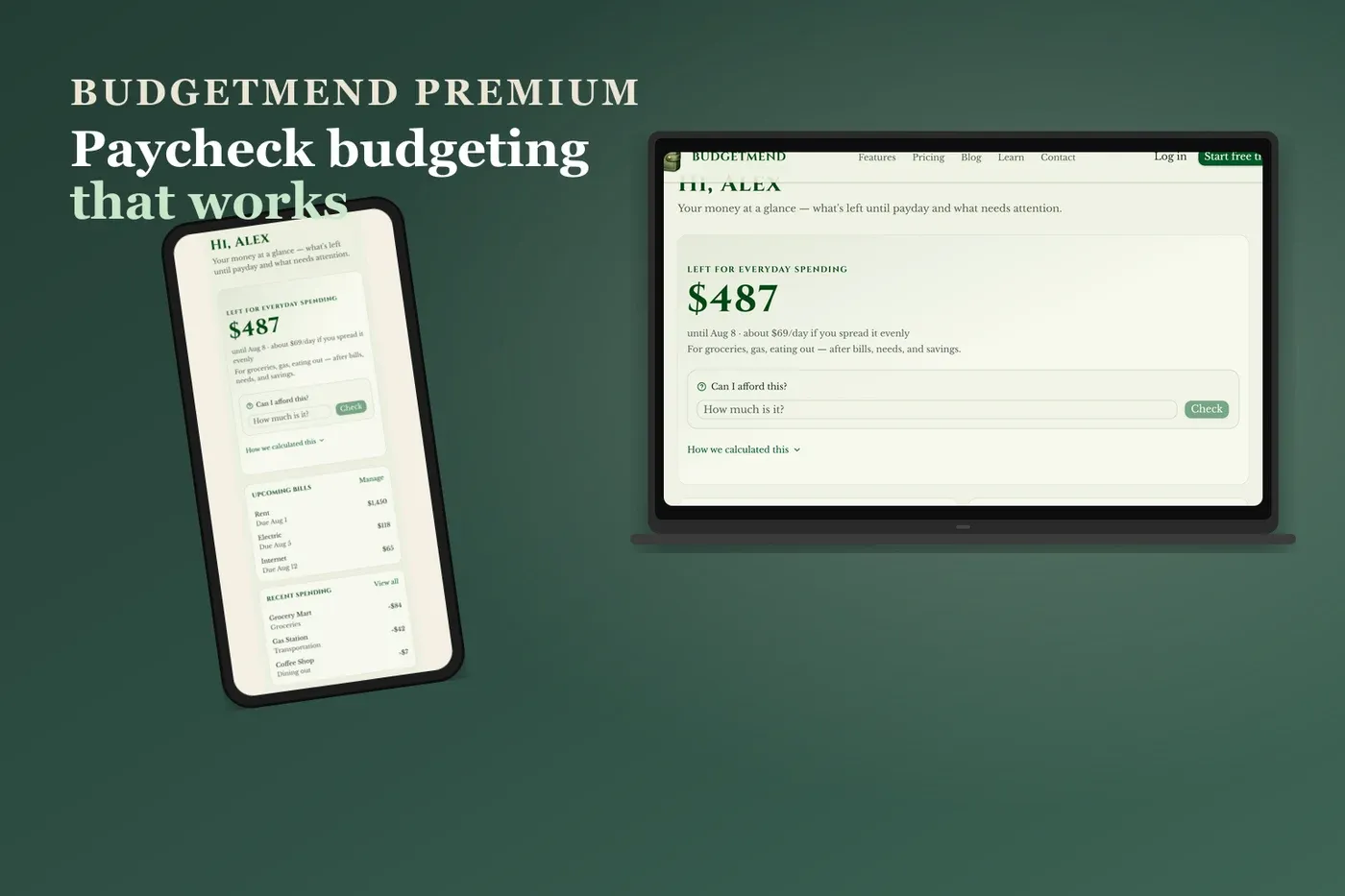
Budgetmend simplifies the paycheck-first budgeting system by automating the entire process, ensuring that your financial management becomes seamless and stress-free. With this automation, every paycheck is meticulously allocated to cover your expenses, savings, and debt repayments, aligning perfectly with your income cycle. This eliminates the need for manual tracking and constant adjustments, giving you more time to focus on other important aspects of your life.
One of the standout features of Budgetmend is its ability to match your bills with your paycheck calendar. This ensures that you never miss a payment, as it automatically schedules your bills to coincide with your income dates. Additionally, Budgetmend calculates your 'safe to spend' amount, giving you a clear picture of your discretionary spending without jeopardizing your financial obligations. This feature provides peace of mind, knowing that your essentials are covered while still allowing for some financial flexibility.
To start automating your finances, simply input your paycheck schedule and let Budgetmend do the rest. By integrating these features into your financial routine, you can effortlessly manage your budget and focus on achieving your financial goals.
Sources
The following sources informed the methods, formulas, and recommendations in this article.
- Bankrate: "Debt Snowball vs. Debt Avalanche: What's the Best Way to Pay Off Debt?" - This article explains the differences between the debt snowball and avalanche methods and helps you decide which might be better for your financial situation. https://www.bankrate.com/finance/debt/debt-snowball-vs-debt-avalanche/
- Experian: "Debt Avalanche vs. Debt Snowball: Which Is Better for You?" - Experian provides a detailed comparison of the two debt repayment strategies, including how each can fit different financial goals and pay schedules. https://www.experian.com/blogs/ask-experian/debt-avalanche-vs-debt-snowball/
- CFPB: "Getting Out of Debt" - The Consumer Financial Protection Bureau offers guidance on managing debt, including an overview of different repayment strategies like the snowball and avalanche methods. https://www.consumerfinance.gov/consumer-tools/debt-collection/getting-out-debt/
- Investopedia: "Debt Snowball vs. Debt Avalanche: Which Method Should You Use?" - This article provides insights into how each method works and includes examples to help you align your debt repayment with your pay schedule. https://www.investopedia.com/articles/personal-finance/082616/debt-snowball-vs-debt-avalanche-which-method-should-you-use.asp
- NerdWallet: "Debt Snowball vs. Avalanche: Which Payoff Method Is Right for You?" - NerdWallet discusses the pros and cons of each method and offers advice on choosing the best approach based on your financial habits and income timing. https://www.nerdwallet.com/article/finance/debt-snowball-vs-avalanche
Frequently asked questions
What are the main differences between snowball and avalanche methods?
The debt snowball method focuses on paying off your smallest debts first, regardless of interest rates. This approach can provide quick wins and boost motivation. In contrast, the debt avalanche method targets debts with the highest interest rates first, potentially saving you more money on interest over time. While snowball offers psychological benefits by quickly reducing the number of debts, avalanche is more cost-effective in the long run. Choosing between them depends on whether you prioritize emotional satisfaction or financial efficiency.
How can I decide which debt repayment method is best for me?
To determine the best method, assess your financial situation and personal preferences. If you thrive on quick wins and need the motivation of seeing debts disappear, the snowball method might suit you. However, if you’re more focused on minimizing interest payments and can stay motivated without immediate results, the avalanche method could be better. Consider factors such as your total debt amount, interest rates, and your ability to stick to a plan. A financial advisor can also provide personalized guidance based on your specific circumstances.
Can I switch between snowball and avalanche methods?
Yes, you can switch between the snowball and avalanche methods if your financial situation or priorities change. For instance, you might start with the snowball method to gain momentum and then switch to the avalanche method to tackle high-interest debts. It’s important to reassess your strategy periodically, especially if your income changes or you receive a windfall. Flexibility in your approach can help you stay motivated and ensure that your debt repayment strategy remains aligned with your financial goals.
Does my pay schedule really affect my debt repayment strategy?
Yes, your pay schedule can significantly impact your debt repayment strategy. If you’re paid bi-weekly, you might benefit from the snowball method by making frequent, smaller payments that quickly eliminate small debts. Conversely, if you’re paid monthly, the avalanche method might be more feasible, allowing you to allocate larger sums towards high-interest debts. Aligning your repayment strategy with your pay schedule can help you manage cash flow effectively and ensure that you’re consistently making progress towards becoming debt-free.
Are there any tools to help manage debt repayment?
Several tools and apps can help manage debt repayment, such as Mint, YNAB (You Need A Budget), and Debt Payoff Planner. These tools allow you to track your debts, set up repayment plans, and monitor your progress. They can also send reminders for due dates and help you visualize the impact of different repayment strategies. Additionally, many financial institutions offer online calculators to compare the outcomes of the snowball and avalanche methods. Utilizing these tools can provide clarity and keep you organized throughout your debt repayment journey.
Educational disclaimer
This article is for informational purposes only and should not be considered financial advice. Please consult with a financial advisor for personalized guidance.
Budgetmend provides budgeting tools and educational content. We are not a bank, lender, tax advisor, or investment advisor.
Related articles
More practical guides to help you plan around your paycheck.