Paycheck Planning
Mastering Budgeting with a Fluctuating Income
Learn how to effectively manage your budget when your income varies each month. Discover strategies for handling baseline expenses, setting up sinking funds, and establishing a review rhythm.

Navigating the financial waters with a fluctuating income can feel like trying to sail through a storm without a compass. According to a 2022 study by the U.S. Bureau of Labor Statistics, nearly 16% of American workers experience income volatility, often due to freelance work, seasonal jobs, or commission-based roles. This unpredictability can make traditional budgeting methods seem ineffective, leaving many feeling overwhelmed and financially insecure. However, mastering budgeting with a fluctuating income is not only possible but can lead to greater financial resilience and peace of mind. By focusing on baseline expenses, establishing sinking funds, and maintaining a regular review rhythm, you can create a flexible yet robust financial plan that adapts to your income's ebb and flow.
The key to success lies in understanding your financial priorities and preparing for the unexpected. By identifying your essential expenses and creating a safety net for irregular costs, you can build a budget that supports your lifestyle, regardless of how your income fluctuates. With careful planning and regular adjustments, you can achieve financial stability and even save for future goals.
- Identify your baseline expenses: List all essential monthly costs such as rent, utilities, groceries, and transportation.
- Establish sinking funds: Set aside money regularly for predictable but irregular expenses like car maintenance or annual insurance premiums.
- Create a buffer: Aim to save at least one month’s worth of expenses to cushion against low-income months.
- Review and adjust regularly: Set a monthly date to assess your budget and make necessary adjustments based on your income changes.
- Prioritize debt repayment: Allocate a portion of your income towards paying down high-interest debts to reduce financial pressure.
- Plan for irregular income: Use a percentage system to allocate funds for savings, expenses, and discretionary spending.
Key Takeaways
Budgeting with a fluctuating income can be challenging, but by focusing on baseline expenses, establishing sinking funds, and maintaining a consistent review rhythm, individuals can achieve financial stability. These strategies help manage unpredictability, ensuring that essential expenses are covered while allowing for future financial goals to be met.
| Point | Details |
|---|---|
| Point | Details |
| Baseline Expenses | Identify and prioritize essential expenses to ensure they are covered even with income variability. |
| Sinking Funds | Create funds for specific future expenses to avoid financial strain when they arise. |
| Review Rhythm | Regularly assess and adjust your budget to stay aligned with income changes and financial goals. |
| Income Buffer | Build a buffer or emergency fund to manage months with lower income. |
| Flexible Budgeting | Adopt a flexible approach that allows adjustments based on income fluctuations while maintaining financial discipline. |
What Are Baseline Expenses and How to Identify Them?
Baseline expenses are the essential costs that you need to cover each month, regardless of your income fluctuations. These are the non-negotiable expenses that keep your household running smoothly, such as rent or mortgage payments, utilities, groceries, and insurance premiums. Identifying these core expenses is crucial when budgeting with a fluctuating income, as it allows you to understand the minimum amount of money you need to earn each month to maintain your basic lifestyle.
To identify your baseline expenses, start by reviewing your bank statements and bills from the past few months. Look for recurring payments that are necessary for your day-to-day living and categorize them as essential. Be honest with yourself about what truly constitutes a necessity versus a luxury. For instance, while your Netflix subscription might be enjoyable, it's not a baseline expense like your electricity bill.
Once you've identified your baseline expenses, calculate the total amount. This figure will serve as a foundation for your budget, helping you determine how much you need to earn at a minimum each month. Having this clarity enables you to make informed financial decisions, even when your income varies.
Pro Tip: Revisit your baseline expenses every few months to ensure they accurately reflect your current needs and financial situation. Adjust as necessary to accommodate any changes in your lifestyle or cost of living.
How Can Sinking Funds Help Stabilize Your Budget?
Sinking funds serve as a strategic component in budgeting with fluctuating income, offering a structured way to handle irregular expenses. Unlike emergency funds, which are reserved for unforeseen circumstances, sinking funds are earmarked for anticipated expenses that do not occur monthly, such as car maintenance, holiday gifts, or annual insurance premiums. By setting aside a small amount of money each month into specific sinking funds, you can distribute the financial burden of these expenses over time, preventing them from disrupting your monthly budget.
To effectively establish sinking funds, start by identifying upcoming expenses and their expected costs. Calculate how much you need to save each month by dividing the total expense by the number of months until the payment is due. This method ensures that when the expense arises, you have the funds readily available, minimizing financial stress and maintaining budget stability. Regularly reviewing and adjusting your sinking funds is crucial, especially when your income fluctuates, as it allows you to reallocate resources based on your current financial situation.
| Expense Type | Total Cost | Months to Save | Monthly Contribution |
|---|---|---|---|
| Car Maintenance | $600 | 12 | $50 |
| Holiday Gifts | $300 | 6 | $50 |
| Annual Insurance | $1200 | 12 | $100 |
| Vacation | $2000 | 10 | $200 |
| Home Repairs | $1500 | 15 | $100 |
Why Is a Regular Budget Review Important?
Establishing a regular budget review rhythm is crucial when managing a fluctuating income. Unlike a fixed income, where expenses and savings can be anticipated with more certainty, a variable income requires ongoing adjustments. Regular reviews ensure that your budget remains aligned with your financial goals and lifestyle changes. By frequently assessing your financial situation, you can quickly identify any discrepancies between your projected and actual income, allowing you to make necessary adjustments before they become problematic.
A consistent review process also allows you to track your progress in building and maintaining sinking funds. These funds are essential for covering irregular expenses, such as annual subscriptions or unexpected car repairs, and a regular review helps ensure that you're contributing enough to each fund. Additionally, by reviewing your budget regularly, you can better prepare for periods of lower income by adjusting your spending habits and prioritizing essential expenses over discretionary ones.
Moreover, having a set review rhythm fosters financial discipline and accountability. It encourages you to stay engaged with your financial health, reducing the likelihood of overspending or neglecting savings goals. Regular reviews also provide an opportunity to celebrate financial milestones, which can boost motivation and reinforce positive budgeting behaviors.
Pro Tip: Set a specific day each month for your budget review to create a habit. Use this time to adjust your spending categories and savings goals based on your latest income fluctuations.

How to Adjust Your Budget for Income Variability?
Adjusting your budget to accommodate income variability is crucial for maintaining financial stability. Start by categorizing your expenses into fixed, variable, and discretionary. Fixed expenses, like rent or mortgage, remain constant and should be prioritized. Variable expenses, such as utilities and groceries, may fluctuate but can often be adjusted. Discretionary expenses, like dining out or entertainment, are the most flexible and can be reduced during lean months. By understanding these categories, you can better allocate your income and ensure essential needs are met first.
Incorporating a buffer in your budget is another effective strategy. This involves setting aside a portion of your income during higher-earning months to cover potential shortfalls in lower-income periods. This buffer acts as a financial cushion, providing peace of mind and stability. Additionally, maintaining a dynamic budget allows for adjustments as your income changes. Regularly updating your budget to reflect current financial situations ensures that you are always prepared, regardless of income fluctuations.
Lastly, consider adopting a 'pay yourself first' approach. This means prioritizing savings and emergency funds before addressing other expenses. By setting aside a predetermined percentage of your income for savings, you create a safety net that can support you through unpredictable financial times. This proactive approach not only enhances your financial resilience but also encourages disciplined saving habits.

What Financial Tools Can Assist in Managing Fluctuating Incomes?
Managing a fluctuating income can be challenging, but leveraging financial tools and apps can significantly streamline the budgeting process. These tools are designed to help track income and expenses, set financial goals, and provide insights into spending habits. For instance, apps like YNAB (You Need A Budget) and Mint offer features that allow users to categorize expenses and adjust budgets in real-time, which is crucial for those with variable incomes. These platforms often include goal-setting features, which can be particularly useful for establishing and maintaining sinking funds.
Budgeting apps often come with the ability to link directly to bank accounts, providing an up-to-date picture of your financial situation. This feature is particularly beneficial for individuals with fluctuating incomes, as it allows for immediate adjustments to spending and saving strategies. Additionally, tools like PocketGuard and EveryDollar offer intuitive interfaces that make it easy to see where your money is going and where you might need to cut back. These tools can help ensure that even when income is unpredictable, your financial goals remain on track.
Moreover, using spreadsheets like Google Sheets or Excel can be a flexible alternative for those who prefer a more hands-on approach. These tools allow for customization and can be tailored to track specific financial metrics that matter most to you. By setting up formulas and charts, you can easily visualize income trends and spending patterns over time, aiding in better decision-making.
Pro Tip: Regularly updating your financial tools and reviewing your budget can help you stay on top of your finances. Set aside a specific time each week to reconcile your accounts and adjust your budget as needed.
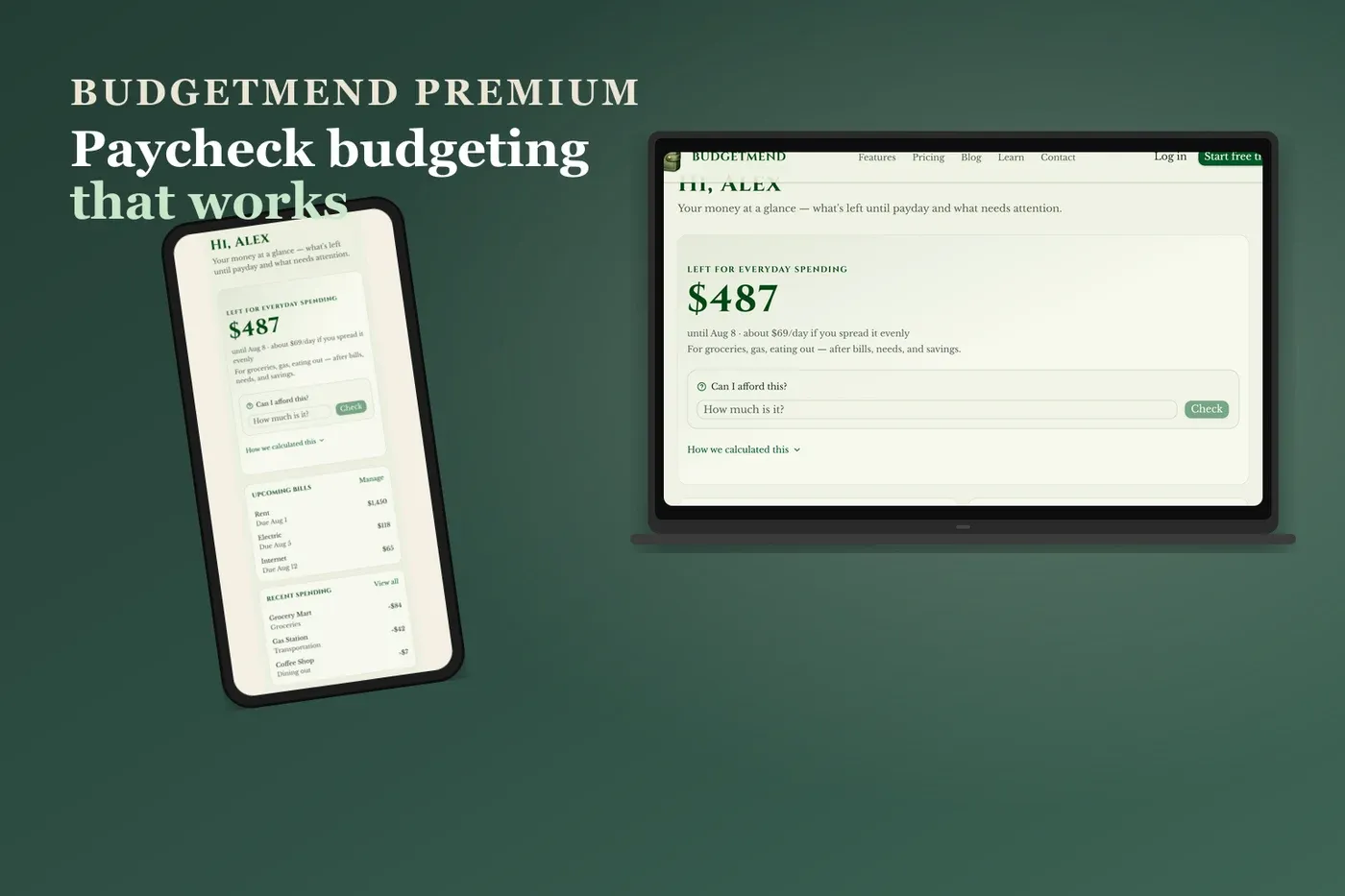
Budgetmend makes the paycheck-first system automatic
Budgetmend simplifies the complexities of budgeting with a fluctuating income by automating the paycheck-first system. This approach ensures that your financial priorities are addressed immediately as you receive your income, minimizing the stress of managing variable earnings. By setting up a paycheck calendar, Budgetmend aligns your income with your bills and expenses, ensuring that you are always prepared for upcoming financial obligations. This alignment helps in maintaining a smooth cash flow, even when your income varies from one period to the next.
With Budgetmend, you can effortlessly match your bills to your income schedule, ensuring that essential expenses are covered as soon as your paycheck arrives. This system not only helps in preventing late fees and overdrafts but also gives you peace of mind knowing that your critical financial needs are met. Additionally, Budgetmend calculates a 'safe to spend' amount, providing you with a clear picture of your discretionary spending power after accounting for all necessary expenses. This feature is particularly beneficial for those with irregular income, as it helps in avoiding overspending during leaner months.
Explore how Budgetmend can streamline your budgeting process by setting up your paycheck calendar today. Experience the ease of bill matching and gain confidence in your financial management with a clear view of what’s safe to spend.
Sources
The following sources informed the methods, formulas, and recommendations in this article.
- Bankrate: "How to budget with an irregular income" provides strategies for managing a budget when your income varies, including setting baseline expenses and creating sinking funds. https://www.bankrate.com/banking/savings/how-to-budget-with-an-irregular-income/
- CFPB: "How to budget when your income is unpredictable" offers insights into establishing a review rhythm and managing finances with fluctuating earnings. https://www.consumerfinance.gov/about-us/blog/how-to-budget-when-your-income-is-unpredictable/
- Experian: "Budgeting Tips for Freelancers and Gig Workers" discusses the importance of identifying baseline expenses and using sinking funds to prepare for future expenses. https://www.experian.com/blogs/ask-experian/budgeting-tips-for-freelancers-and-gig-workers/
- Discover: "How to Budget with a Variable Income" highlights the significance of setting aside money for baseline expenses and regularly reviewing your budget to stay on track. https://www.discover.com/credit-cards/resources/how-to-budget-with-a-variable-income/
- FDIC: "Money Smart for Adults" includes resources and tips for managing a budget with fluctuating income, focusing on maintaining a review rhythm and planning for irregular expenses. https://www.fdic.gov/resources/consumers/money-smart/adult.html
Frequently asked questions
How do I budget with a variable income?
Budgeting with a fluctuating income starts with identifying your baseline expenses—those essential costs you incur each month, like rent, utilities, and groceries. Once you know your baseline, aim to cover these with your lowest expected income. Any surplus from higher-income months can then be allocated to savings or discretionary spending. It's crucial to maintain a buffer or emergency fund to cover months when income falls short. Regularly tracking your income and expenses will help you adjust your budget dynamically, ensuring you remain financially stable despite income variability.
What are sinking funds?
Sinking funds are savings set aside for specific, anticipated expenses that don't occur monthly, such as car repairs, holiday gifts, or annual insurance premiums. By contributing a small amount regularly to these funds, you can manage large expenses without disrupting your monthly budget. To start, identify upcoming expenses, calculate the total amount needed, and divide that by the number of months until the expense is due. This approach helps you avoid debt and ensures you're prepared for predictable financial obligations, making it easier to manage a fluctuating income.
How often should I review my budget?
Reviewing your budget regularly is crucial, especially with a fluctuating income. A monthly review is generally recommended to assess your spending patterns, adjust for any changes in income, and ensure you're on track with your financial goals. However, if your income varies significantly, consider bi-weekly reviews to stay more aligned with your financial situation. During these reviews, compare your actual spending against your budget, adjust categories as needed, and ensure your sinking funds and emergency savings are adequately funded. Consistent reviews help you remain proactive and responsive to financial changes.
What tools help with budgeting?
Several tools can assist with budgeting, especially when dealing with a variable income. Apps like YNAB (You Need A Budget), Mint, and EveryDollar offer features tailored for tracking income and expenses, setting financial goals, and adjusting budgets dynamically. These tools often provide visual insights into your spending habits, helping you identify areas for improvement. Additionally, spreadsheets like Google Sheets or Microsoft Excel can be customized to fit your specific needs, allowing for detailed tracking and analysis. Whichever tool you choose, ensure it aligns with your financial habits and provides the flexibility needed for income fluctuations.
How to manage expenses with changing income?
To manage expenses with a changing income, prioritize your spending by distinguishing between needs and wants. Focus on covering essential expenses first, such as housing, food, and utilities. Establish an emergency fund to cushion against months with lower income. Utilize sinking funds for predictable, non-monthly expenses, and adjust your discretionary spending based on your current financial situation. Regularly update your budget to reflect any changes in income or expenses. This proactive approach helps maintain financial stability and ensures you're prepared for both lean and prosperous months, reducing stress and improving financial resilience.
Educational disclaimer
This article provides general information and should not be considered financial advice. Please consult a financial advisor for personalized guidance.
Budgetmend provides budgeting tools and educational content. We are not a bank, lender, tax advisor, or investment advisor.
Related articles
More practical guides to help you plan around your paycheck.